How Long Do IV Vitamin Infusions Last? Understanding Duration & Benefits
Zora Neuro Spa Editorial · September 13, 2026

If you’ve ever felt drained, foggy, or simply not at your best, you might have heard about the potential benefits of IV vitamins. This innovative approach to wellness is gaining attention, but a common question remains: how long do the effects actually last? This guide will walk you through how long you can expect to feel the benefits of an IV vitamin infusion, the factors that influence its duration, and what makes it a unique option for supporting your health.
Quick Answer
The immediate rejuvenating effects of an IV vitamin infusion, such as increased hydration and energy, are often felt for several days. The vitamins and minerals themselves, however, can remain in your system and support cellular function for a period ranging from several days to a few weeks. This duration depends heavily on your individual metabolism, your body's current nutrient needs, and the specific formulation of the IV drip you receive.
TL;DR
- Immediate vs. Lasting Effects: You'll likely feel more hydrated and energized for about 3-7 days, but the underlying nutritional benefits continue to support your body's cells for up to several weeks. Learn what determines how long vitamins stay in your system.
- It's Highly Personal: Your metabolism, current health status, lifestyle, and even how hydrated you are all play a major role in how long the benefits last. See the factors that influence duration.
- Not All Drips Are the Same: An IV drip for hydration will have a different duration of effect than one designed for immune support or athletic recovery, based on its ingredients. Compare the different types of IV drips.
- Safety and Efficacy Come First: The best results come from a personalized plan developed with a healthcare professional in a clinical setting. Understand the importance of professional guidance.
In This Article
- What Exactly Are IV Vitamin Infusions?
- How Long Do IV Vitamins Actually Stay in Your System?
- What Factors Influence How Long IV Vitamins Last?
- Are There Different Types of IV Vitamins, and How Do Their Durations Vary?
- What Are the Benefits of IV Vitamin Therapy in 2026?
- How Often Should You Get IV Vitamin Infusions?
- What Are the Disadvantages or Side Effects of IV Vitamin Therapy?
- Frequently Asked Questions About IV Vitamin Infusions
What Exactly Are IV Vitamin Infusions?
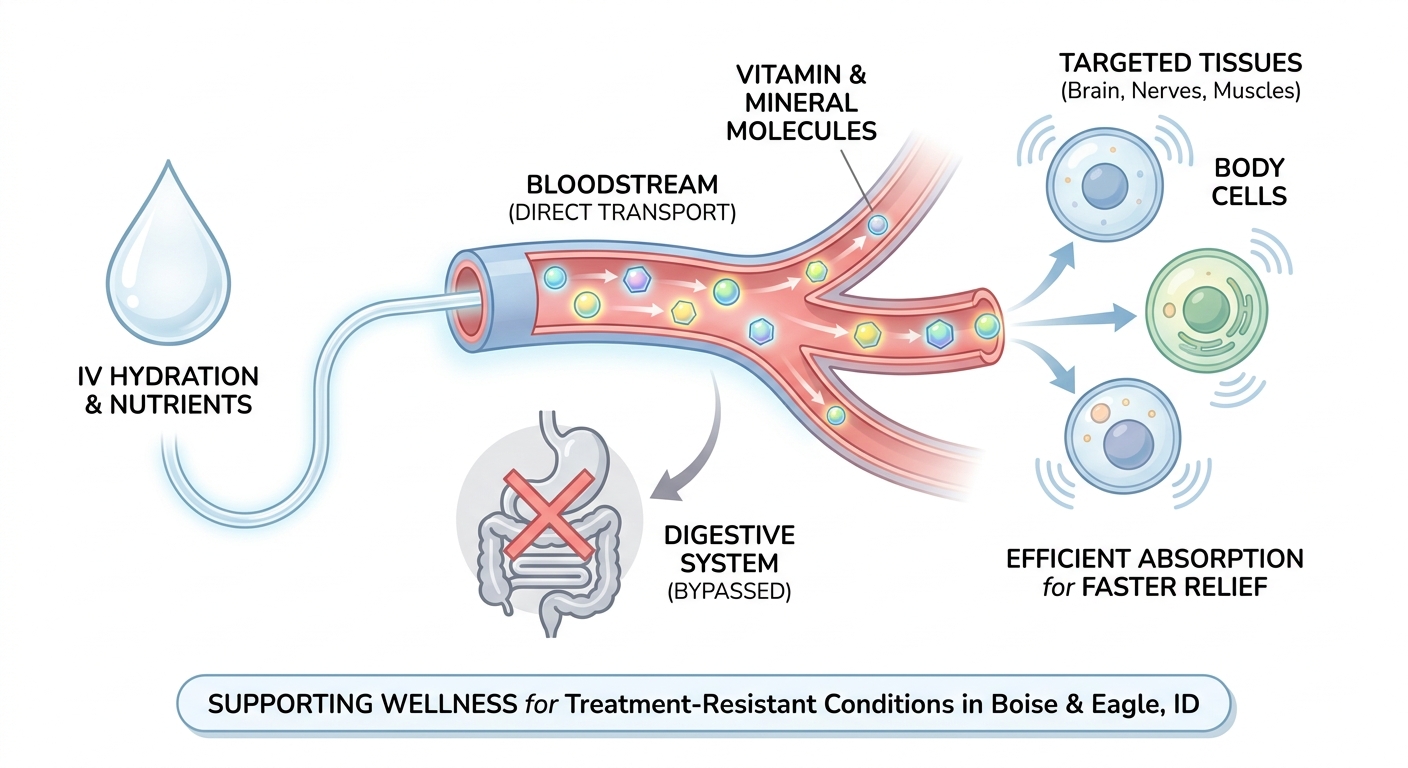
An IV vitamin infusion is a medical procedure that delivers essential fluids, vitamins, and minerals directly into your bloodstream through a small intravenous (IV) catheter. This method bypasses the digestive system, allowing for maximum absorption of the nutrients. When you take vitamins orally, they have to pass through your stomach and intestines, where a significant portion can be lost before they ever reach your cells.
IV administration ensures the nutrients are immediately available for your body to use. This makes IV Nutrition Therapy a highly efficient way to address nutrient deficiencies, support hydration, and promote overall wellness. The process is straightforward and typically takes place in a comfortable clinical setting, lasting anywhere from 30 to 90 minutes.
Common formulations are designed to meet specific health goals. For example, a Myers' Cocktail is a popular blend for general wellness and energy, while an Immunity Boost IV might contain higher concentrations of Vitamin C and Zinc to support your body's natural defenses. To put it simply: a Myers' Cocktail is a classic wellness formulation that combines B vitamins, Vitamin C, magnesium, and calcium in a single infusion, while an Immunity Boost IV is a formulation weighted toward nutrients like Vitamin C and Zinc that the body uses in immune function.
Key takeaway: IV vitamin infusions deliver nutrients directly to your bloodstream, bypassing the digestive system for more efficient absorption compared to oral supplements.
How Long Do IV Vitamins Actually Stay in Your System?
The active effects of an IV vitamin drip can be felt for a few days up to several weeks, but the answer depends on which component you're talking about: the fluids or the vitamins themselves. The saline solution used for hydration is typically processed and excreted by your body within a few hours to a day. The vitamins and minerals, however, have a longer journey.
Two key concepts help explain this:
- Bioavailability refers to the proportion of a nutrient that enters circulation and is able to have an active effect. Because IV therapy delivers nutrients directly to the blood, it bypasses digestive absorption losses that can occur with oral intake.
- Half-life is the time it takes for the concentration of a substance in your body to be reduced by half. Different vitamins have different half-lives.
For example, water-soluble vitamins like Vitamin C and the B-complex family are used or excreted relatively quickly, often within a day or two. However, the positive impact of restoring your levels can last much longer. Many people report feeling more energetic and mentally clear for 3 to 7 days following an infusion. Fat-soluble vitamins (like A, D, E, and K), which are less commonly used in standard wellness IVs, are stored in body fat and can remain for much longer.
Ultimately, your body will hold onto the IV vitamins for as long as it needs them. If you have a significant deficiency, your body will use and store the nutrients more readily, leading to longer-lasting benefits.
What Factors Influence How Long IV Vitamins Last?
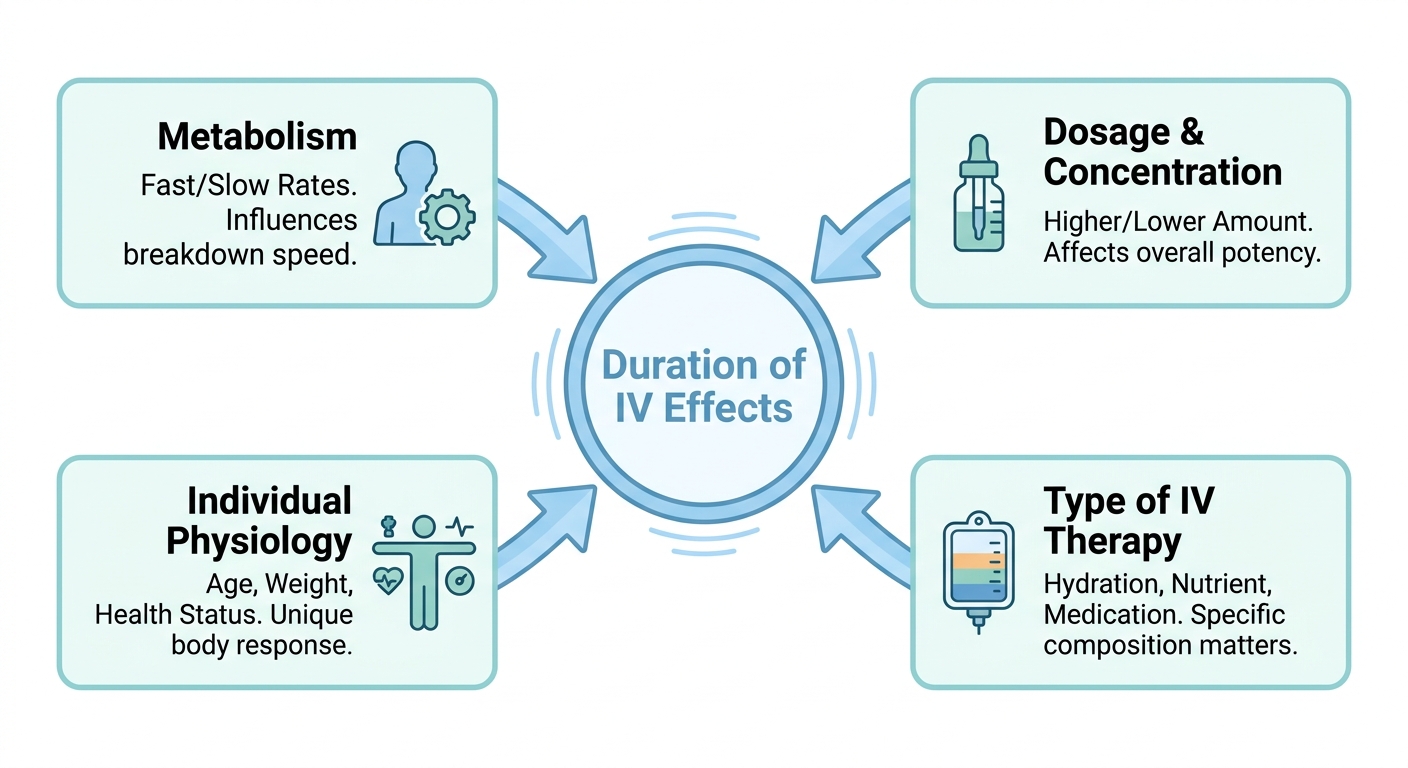
The duration of IV vitamin effects is significantly influenced by your unique physiology, current health, and daily habits. It’s not a one-size-fits-all answer; several personal factors determine how your body uses and retains the nutrients from an infusion. Understanding these can help you set realistic expectations for your treatment.
Here are the primary factors at play:
Your Individual Metabolism
Your basal metabolic rate (BMR)—the rate at which your body uses energy at rest—is a major driver. Basal metabolic rate (BMR) is the amount of energy your body burns simply to keep essential functions running while you're at rest. A faster metabolism may process vitamins and minerals more quickly than a slower one. Age, gender, and genetics all contribute to your unique metabolic fingerprint.
Hydration and Nutrient Levels
If you are chronically dehydrated or have a significant nutrient deficiency, your body will absorb and utilize the provided fluids and vitamins more readily. In this case, you may feel a dramatic improvement quickly, but your body may also use up the supply faster to correct the deficit. Conversely, if your nutrient levels are already optimal, the effects might be more subtle and the excess may be excreted sooner.
Lifestyle and Activity Level
Your daily activities have a direct impact.
- High-stress lifestyles can deplete certain nutrients, like B vitamins and magnesium, more rapidly.
- Athletes or physically active individuals burn through energy and nutrients at a higher rate, which may shorten the duration of an IV's effects.
- Alcohol consumption can dehydrate you and deplete essential vitamins, increasing your body's demand.
The Specific Formula Used
The contents of your IV bag matter immensely. Different vitamins and minerals are processed at different speeds. A simple hydration drip's effects might feel shorter-lived than a complex formula designed for immune support, which contains nutrients that work in your system for a longer period. This is why a consultation to determine the right formula is a key part of medically-guided IV therapy. Medically-guided IV therapy is care that is prescribed, formulated, and monitored by a licensed clinician rather than selected off a menu.
Key takeaway: No two people process an infusion identically — your metabolism, hydration status, lifestyle demands, and the formula itself all shape how long the benefits last.
Are There Different Types of IV Vitamins, and How Do Their Durations Vary?
Yes, different types of IV vitamin formulations are designed for specific needs, and their components' durations vary based on their ingredients and your body's immediate demand. A drip intended for rapid rehydration will work differently from one aimed at boosting long-term immune function. Understanding these differences can help you choose the right therapy for your goals.
Here’s a comparison of common IV drip types and their typical effect durations:
| IV Drip Type | Primary Goal | Common Key Ingredients | Typical Duration of Perceived Effects |
|---|---|---|---|
| Hydration | Rapidly restore fluid and electrolyte balance. | Saline, Sodium Chloride, Potassium, Electrolytes | Shorter: Immediate effects are felt for a short period, typically resolving quickly. |
| Immunity | Support the body's natural defense systems. | Vitamin C, Zinc, B-Complex Vitamins, Glutathione | Medium: Benefits may be felt for several days to a week. |
| Energy | Combat fatigue and improve mental clarity. | B-Complex Vitamins (B12, B5, B6), Magnesium, Taurine | Medium: Some people report a noticeable boost for a few days, though results vary. |
| Recovery | Support post-exercise recovery as part of a wellness routine. | Amino Acids, Magnesium, Vitamin C, Anti-inflammatories | Varies: Some users report recovery support from this formula, though individual results vary and duration has not been directly compared to other drip types. |
For instance, a hydration-focused IV like our Hydration drip provides immediate relief from dehydration, with fluids naturally processed by the body relatively quickly. In contrast, an IV like our Myers' Cocktail, packed with a wide range of B vitamins and Vitamin C, provides an energy boost that many people feel for several days, as the vitamins work to support ongoing cellular processes.
What Are the Benefits of IV Vitamin Therapy in 2026?
In 2026, IV vitamin therapy offers a direct and efficient way to boost nutrient levels, supporting energy, immunity, recovery, and overall well-being. For many people whose bodies don't effectively absorb nutrients from food or oral supplements, IV therapy is one option some people consider to help meet nutrient needs, alongside guidance from a healthcare provider.
The primary benefits stem from its high bioavailability:
- Improved Energy Levels: Bypassing the digestive system allows vitamins like B12 and B-complex to go straight to work in your metabolic pathways, helping support energy levels, though individual results vary and these statements have not been evaluated by the FDA.
- Enhanced Immune Support: Some people use Vitamin C and Zinc IV infusions as part of a general wellness routine, though these statements have not been evaluated by the FDA and are not intended to diagnose, treat, cure, or prevent any disease.
- Faster Recovery: Athletes and active individuals sometimes use IV therapy with amino acids and other nutrients as part of their post-exercise wellness routine.
- Targeted Symptom Relief: Custom formulas can be created to align with your general wellness goals; consult a healthcare provider regarding any specific medical concerns.
- Optimal Hydration: Proper hydration supports overall wellness, including skin and cognitive comfort, as part of a healthy lifestyle.
Before starting treatment, it's helpful to know what to expect from an IV nutrition session to ensure you are comfortable and prepared.
Reasons People Consider Trying IV Vitamins:
- Persistent Fatigue: You feel tired no matter how much you sleep.
- Frequent Illness: You seem to catch every cold that goes around.
- Brain Fog: You struggle with focus and mental clarity.
- Slow Recovery: You feel sore for days after a workout.
- Dull Skin and Hair: You're looking for a radiance boost from the inside out.
How Often Should You Get IV Vitamin Infusions?
The ideal frequency for IV vitamin infusions varies greatly depending on your individual health goals, existing deficiencies, and lifestyle. There is no universal schedule; the right cadence is one that is tailored to you, which is why we always recommend a customized treatment plan from a healthcare professional.
As a general guideline, here are some common approaches:
- For General Wellness: Many individuals seeking to maintain optimal health and prevent deficiencies opt for periodic infusions as recommended by their healthcare provider.
- To Address Specific Deficiencies: If you are treating a known deficiency (like low B12), your provider might recommend an initial series of weekly infusions, followed by a less frequent maintenance schedule.
- For Acute Needs: If you're recovering from an illness, jet lag, or an intense athletic event, a single infusion may be all you need to get back on your feet.

⚠️ Don't Self-Prescribe: IV therapy is a medical procedure that carries some risks, so it's important to consult with a qualified provider. It's crucial to consult with a qualified provider who can assess your health history and recommend a safe and effective treatment plan. More is not always better, and an expert can ensure you get the right nutrients at the right frequency.
What Are the Disadvantages or Side Effects of IV Vitamin Therapy?
While generally safe and well-tolerated, IV vitamin therapy does have potential disadvantages and minor side effects to consider. The most common issues are temporary and mild, such as slight discomfort, bruising, or redness at the injection site. These typically resolve on their own within a day or two.
More serious risks can include infection or an allergic reaction to a component in the IV drip, though these are uncommon when performed by trained professionals. to a component in the IV drip. This is why choosing a reputable clinic that adheres to strict sterile protocols is paramount. At a professional facility, a trained clinician will review your medical history to minimize any risk of adverse reactions.
Other considerations include:
- Cost: IV therapy is an investment in your health. The cost of IV vitamin therapy can be a factor, as it is often not covered by insurance.
- Time Commitment: A session typically requires 30-90 minutes at a clinic, which needs to be factored into your schedule.
- Risk of Over-supplementation: Without professional guidance, there is a risk of receiving too much of certain vitamins, which is another reason why a personalized consultation is essential.
Key takeaway: When performed by a trained professional in a sterile environment, When performed by a trained professional in a sterile environment, minor side effects are more common than serious ones, though any medical procedure carries some risk. Most side effects are minor and temporary, like bruising at the IV site.
Ready to Recharge Your Body? Explore Our IV Nutrition Options Today!
Frequently Asked Questions About IV Vitamin Infusions
Why do I feel so good after IV fluids?
A: The immediate "feel good" sensation after an IV infusion is often due to a combination of rapid rehydration and direct nutrient delivery. Most people are mildly dehydrated without realizing it, and restoring fluid and electrolyte balance can quickly alleviate fatigue, headaches, and brain fog. The instant boost from vitamins like the B-complex family also contributes to this feeling of renewed energy and clarity.
How much weight can you gain from IV fluids?
A: Any weight gain from an IV infusion is temporary water weight, not an increase in body fat. An IV bag adds a small amount of temporary water weight, which your body naturally processes and excretes over time. Your body will naturally process and excrete this extra fluid over the next several hours, and your weight will return to normal.
Is IV vitamin therapy worth the money?
A: For many people, IV vitamin therapy may be a worthwhile option to explore with a healthcare provider, particularly those with digestive concerns, known deficiencies, or demanding lifestyles. Some of the perceived value comes from the high bioavailability of nutrients delivered directly into the bloodstream, compared with oral absorption. A consultation can help determine if it's a cost-effective solution for your specific health goals.
How soon will I feel the effects of an IV vitamin infusion?
A: Many people notice a difference before they even leave the chair, particularly the hydration-related effects like reduced headache pressure and a clearer head. Others feel the full benefit gradually over the following 24 hours as their cells put the delivered nutrients to work. Your starting hydration and nutrient status largely determine how dramatic that first-day shift feels.
Can I speed up or extend how long my IV vitamins last?
A: You can't change how your body metabolizes nutrients, but you can support the results. Drinking water consistently, eating nutrient-dense meals, managing stress, and getting adequate sleep all reduce how quickly your body burns through its reserves. Sticking to a consistent schedule recommended by your provider also helps keep your levels steadier over time than occasional one-off sessions.
Does IV therapy replace my oral vitamins or a healthy diet?
A: No. IV therapy is designed to complement good nutrition, not replace it. Food and oral supplements provide steady, daily nutrient intake, while an infusion delivers a concentrated dose when your body needs a more direct route. Your provider can help you decide how the two fit together for your goals.
Key Takeaways
- Effects vs. nutrients are two different timelines. The energized, hydrated feeling typically lasts several days, while the nutrients themselves can continue supporting cellular function for longer.
- Fluids clear fastest. The saline base of an IV drip is generally processed within hours to a day, which is why hydration-only drips feel shorter-lived.
- Your body sets the pace. Metabolism, hydration status, stress, activity level, and existing deficiencies all influence how quickly you use up what an infusion delivers.
- The formula matters. A hydration drip, a Myers' Cocktail, an immunity blend, and a recovery formula each behave differently in your system.
- Consistency beats intensity. For ongoing wellness goals, a regular schedule tailored by your provider usually serves you better than occasional high-dose sessions.
- Professional oversight is the safeguard. A clinician review of your history, sterile technique, and a personalized formula are what keep IV therapy both safe and genuinely useful.