Ketamine Side Effects When You're Treating Depression
Zora Neuro Spa Editorial · October 17, 2026
If you're weighing ketamine for depression, the real question isn't whether side effects happen — it's which ones, how strong they feel, and how long they last. Most guides describe ketamine side effects in general terms, lumping together surgical anesthesia, recreational misuse, and mental health care. This guide stays narrow on purpose: what mood-disorder patients in the Boise and Eagle area actually experience, route by route, hour by hour.
Quick Answer: What Side Effects Should Depression Patients Expect From Ketamine?
In a monitored clinic, the most commonly reported ketamine side effects during depression treatment are dissociation (a temporary feeling of detachment from your body or surroundings), dizziness, nausea, sedation, and a short-lived rise in blood pressure. These are listed adverse reactions in the FDA prescribing information for esketamine nasal spray, the FDA-approved form of this treatment, and they are the same families of effects described in the clinical literature on ketamine. Nearly all of them fade during the monitored recovery window. That label requires patients to be observed for at least two hours after dosing.
TL;DR
- Most acute effects are tied to the session itself, not the days after it. See the hour-by-hour breakdown
- IV and nasal spray share the same side effect families but differ in delivery, extras like bad taste, and monitoring rules. Compare the two routes side by side
- Depression patients have specific concerns other guides skip, including anxiety during the dissociative window. Read why an unpleasant session isn't a failed one
- Bladder and memory concerns come mainly from frequent high-dose misuse, not supervised protocols. Review what the long-term literature describes
- Some symptoms warrant a same-day call. Check the red-flag list before your first session
In This Article
- Why Do Side Effects Look Different When Ketamine Treats Depression?
- What Are the Most Common Short-Term Side Effects?
- How Long Do Ketamine Side Effects Last After a Session?
- IV Infusion vs. Nasal Spray: How Do Side Effects Compare?
- Can Ketamine Make Depression or Anxiety Feel Worse First?
- What About Long-Term Risks Like Bladder or Memory Problems?
- How Do Clinics in Boise and Eagle Reduce These Side Effects?
Why Do Side Effects Look Different When Ketamine Treats Depression?
Depression protocols use far smaller doses than surgery does, so the side effect picture is dominated by brief perceptual and cardiovascular changes rather than deep sedation.
Sub-anesthetic dosing refers to giving ketamine at a fraction of the amount used to produce surgical anesthesia. Clinical references describe mental health infusion protocols around 0.5 mg/kg delivered slowly over roughly 40 minutes, well below anesthetic induction ranges described in the ketamine clinical monograph on NCBI Bookshelf. You stay awake, you can talk, and you can tell staff how you feel.
That matters because most alarming descriptions of ketamine online come from two very different contexts: emergency anesthesia and recreational misuse. Neither reflects a quiet treatment room with a blood pressure cuff and a nurse watching the monitor.
Dose isn't the only variable. Chronic pain protocols are often slower and longer than mood protocols, which changes what patients notice. The way the medication acts on glutamate signaling is covered in more depth in our explainer on how ketamine acts on the brain.
For depression specifically, the FDA approved esketamine nasal spray in 2019 with a structured set of safety requirements attached, including in-clinic administration and post-dose observation, as stated in its prescribing information. Those rules exist precisely because the predictable side effects occur in a known window.
Key takeaway: Mental health dosing is a fraction of anesthetic dosing, which is why the side effects are short, monitored, and mostly confined to the session itself.
What Are the Most Common Short-Term Side Effects?
The short list: dissociation, dizziness, nausea, sedation or drowsiness, elevated blood pressure, headache, and blurred vision. These appear among the adverse reactions described in the FDA esketamine label and in the published clinical overview of ketamine.
Dissociation is a temporary sense of distance from your body, your thoughts, or the room — often described as floating, drifting, or watching yourself from slightly outside. It's expected at these doses, it's monitored, and it eases as the medication clears.
| Side effect | When it usually shows up | How long it typically lasts | How clinics commonly manage it |
|---|---|---|---|
| Dissociation | Early in the dosing window | Through the session, easing in recovery | Dim lighting, quiet room, reassurance, staff present |
| Dizziness / unsteadiness | During dosing | Often into the recovery period | Stay reclined; assisted walking before discharge |
| Nausea | During or shortly after dosing | Usually resolves the same day | Anti-nausea medication, often given before dosing |
| Blood pressure rise | During dosing | Typically transient | Repeated vital-sign checks throughout |
| Headache | During or after the session | Often same-day | Hydration; discuss any pain reliever with your provider |
| Blurred vision | During dosing | Eases as medication clears | No driving; wait until vision is clear before discharge |
Two practical points patients rarely read in advance. First, nausea is easier to prevent than to treat, which is why pre-medication is a standard part of many protocols. Second, blood pressure changes are the reason monitoring is non-negotiable — the esketamine label directs providers to assess blood pressure before dosing and after administration.
The label also lists contraindications, including aneurysmal vascular disease and a history of intracerebral hemorrhage. That's a screening conversation, not a surprise on treatment day.
Side effects also differ by condition being treated. Our timeline guide covers what lasts minutes versus months across different protocols.
⚠️ Anything that persists well past your session — ongoing vomiting, chest pain, or blood pressure that stays high at home — is a call to your clinic, not something to wait out.
How Long Do Ketamine Side Effects Last After a Session?
Most acute effects are tied to the dosing window and the monitored recovery that follows. Thinking in three windows helps, and our deeper guide on what lasts minutes versus months expands on each one.
During the session. Dissociation, dizziness, and altered perception are strongest while the medication is being delivered. Staff track vitals and stay with you.
The recovery window. Effects taper here. The esketamine label requires observation for at least two hours after dosing before a patient is released, which gives a useful benchmark for how long clinics expect noticeable effects to persist.
Same evening and next morning. Grogginess, a wobbly feeling, or tiredness can linger to bedtime for some people. Next-day effects should be minimal. If they aren't, tell your provider — that's data they use to adjust your protocol.
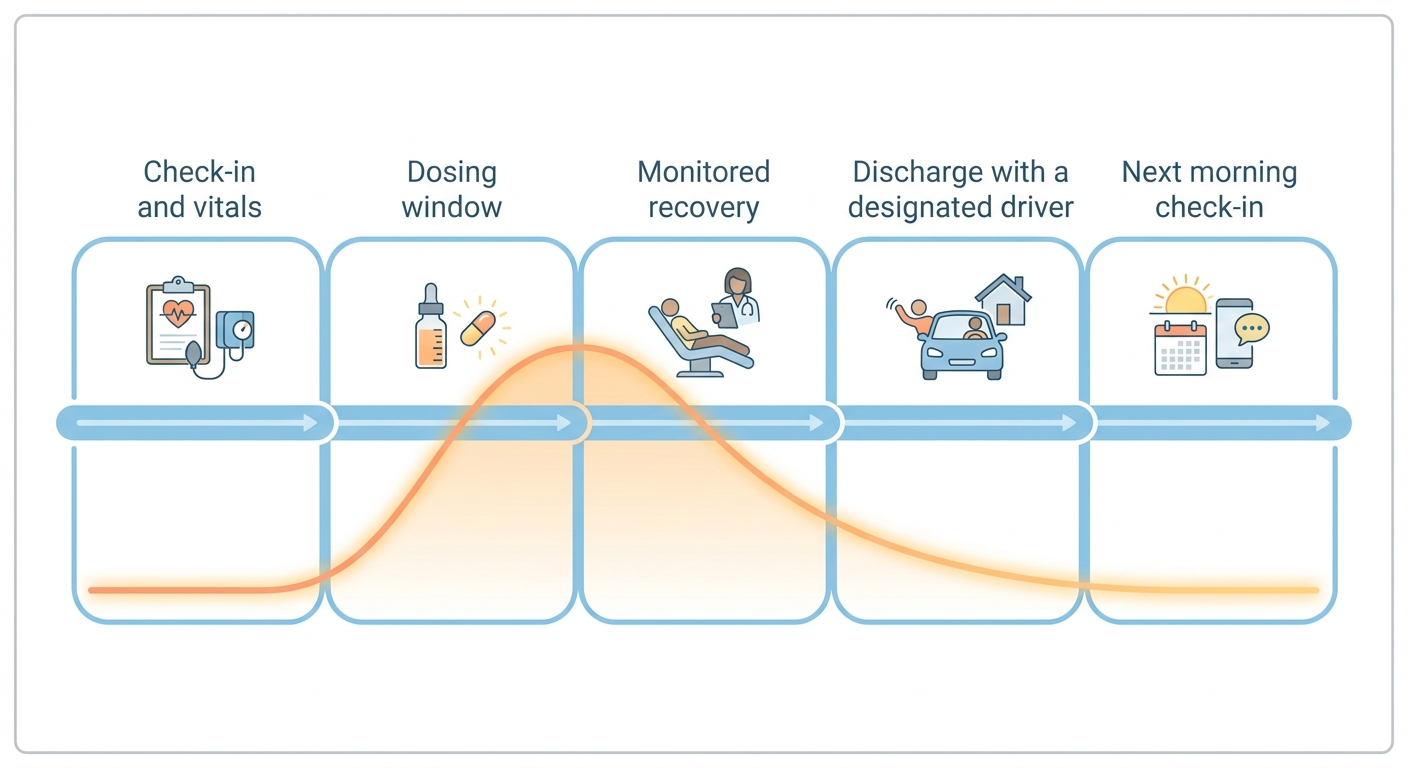
One rule applies across both routes: arrange a ride and do not drive. The esketamine prescribing information instructs patients not to drive or operate machinery until the next day following a restful sleep.
How long do ketamine side effects last for you specifically? That depends on dose, route, sleep, hydration, and whether you ate beforehand. Keeping notes makes patterns visible — we built a simple at-home tracking checklist for exactly that.
IV Infusion vs. Nasal Spray: How Do Side Effects Compare?
Both routes produce the same side effect families. What differs is delivery, the extras unique to nasal dosing, and the monitoring rules attached.
Esketamine is the S-enantiomer of ketamine — one mirror-image half of the molecule — marketed as Spravato and FDA-approved in 2019 for treatment-resistant depression in adults, per its prescribing information. That label reports a mean absolute bioavailability of roughly 48% for the nasal route. Intravenous delivery, by definition, puts the full dose into the bloodstream.
| Factor | IV ketamine infusion | Esketamine nasal spray |
|---|---|---|
| FDA status for depression | Used off-label | FDA-approved in 2019 for treatment-resistant depression |
| Delivery | Slow infusion through an IV line | Self-administered nasal spray under supervision |
| Bioavailability | Full dose enters the bloodstream | Label reports mean absolute bioavailability ~48% |
| Common route-specific extras | IV site discomfort or bruising | Bad taste, nasal irritation, nasal discomfort |
| Monitoring required | Continuous vitals and staff present | Label requires observation for at least 2 hours post-dose |
| Driving | Ride required | Label: no driving until the next day after restful sleep |
Ketamine nasal spray side effects include the shared list — dissociation, dizziness, nausea, sedation, blood pressure elevation — plus taste and nasal irritation that IV patients don't encounter. Ketamine infusion side effects skip the nasal issues but add the small realities of an IV line.
Insurance is often the deciding factor rather than tolerability, since esketamine's FDA approval opens coverage pathways that off-label infusions generally don't have. For a closer look at the approved option, see esketamine's full benefit and side effect picture.
Key takeaway: Choose between routes on candidacy, coverage, and clinical fit — not on the assumption that one route is inherently gentler.
Can Ketamine Make Depression or Anxiety Feel Worse First?
Some people do feel worse before they feel steadier. Anxiety during the dissociative window is common enough that clinics plan for it, and the esketamine label lists anxiety among reported adverse reactions.

Two experiences get confused with each other, and the distinction matters:
- An unpleasant session — feeling anxious, tearful, or disoriented while the medication is active, then returning to baseline during recovery.
- A true adverse event — symptoms that persist, escalate, or involve physical warning signs like chest pain or ongoing vomiting.
Patients also describe mood that dips between sessions as the effects of a given dose fade. This is part of why protocols are built as a series with scheduled follow-up, rather than as one-off appointments. Your provider uses your reports between sessions to adjust timing.
What you can do about it is concrete:
- Tell your clinician before dosing if anxiety is your dominant symptom, so the room and your support plan can be set up accordingly.
- Bring someone you trust for the ride home.
- Write down how the days between sessions feel, not just the session itself.
- Keep your existing mental health care in place unless your prescriber directs otherwise.
⚠️ Any worsening of suicidal thoughts requires same-day contact with your provider. In the US, call or text 988 for the Suicide and Crisis Lifeline, or go to the nearest emergency department. Depression remains a serious medical condition; background on it is available from the National Institute of Mental Health.
If standard medications haven't worked for you, our guide on ketamine therapy for depression when nothing else worked covers how candidacy is assessed.
What About Long-Term Risks Like Bladder or Memory Problems?
The bladder and cognitive concerns you read about come overwhelmingly from the literature on frequent, high-dose recreational use — not from supervised depression protocols.
Ketamine-associated urinary tract toxicity refers to bladder inflammation and urinary symptoms documented in people using ketamine heavily and repeatedly outside medical care; urinary and bladder effects are among the adverse effects described in the ketamine clinical monograph. Frequency and cumulative dose are the variables that separate those reports from a scheduled clinic series.
That doesn't mean the topic is irrelevant to patients. It means it belongs in your monitoring plan, especially if you move into longer-term maintenance dosing.
What thoughtful long-term monitoring typically includes:
- Urinary symptom check-ins — asking about urgency, burning, frequency, or blood in urine at each visit.
- Blood pressure trending — comparing readings across sessions rather than looking at one day in isolation.
- Standardized symptom scoring — tools like the PHQ-9 to track depression symptoms consistently over time.
- Periodic reassessment of frequency — revisiting whether maintenance spacing can be stretched.
- Review of other medications — including anything new prescribed elsewhere.
Your clinician should also be clear about what remains uncertain. Long-term data on repeated therapeutic dosing is still developing, and honest providers say so rather than promising a clean bill of health. We summarize what the six-month evidence shows for patients considering maintenance.
Ketamine is also a controlled substance with recognized misuse potential, which is why take-home supplies are handled cautiously and why treatment stays inside a clinical relationship.
How Do Clinics in Boise and Eagle Reduce These Side Effects?
Most side effect management happens before the medication ever starts. Screening, dose selection, and environment do more work than anything done mid-session.
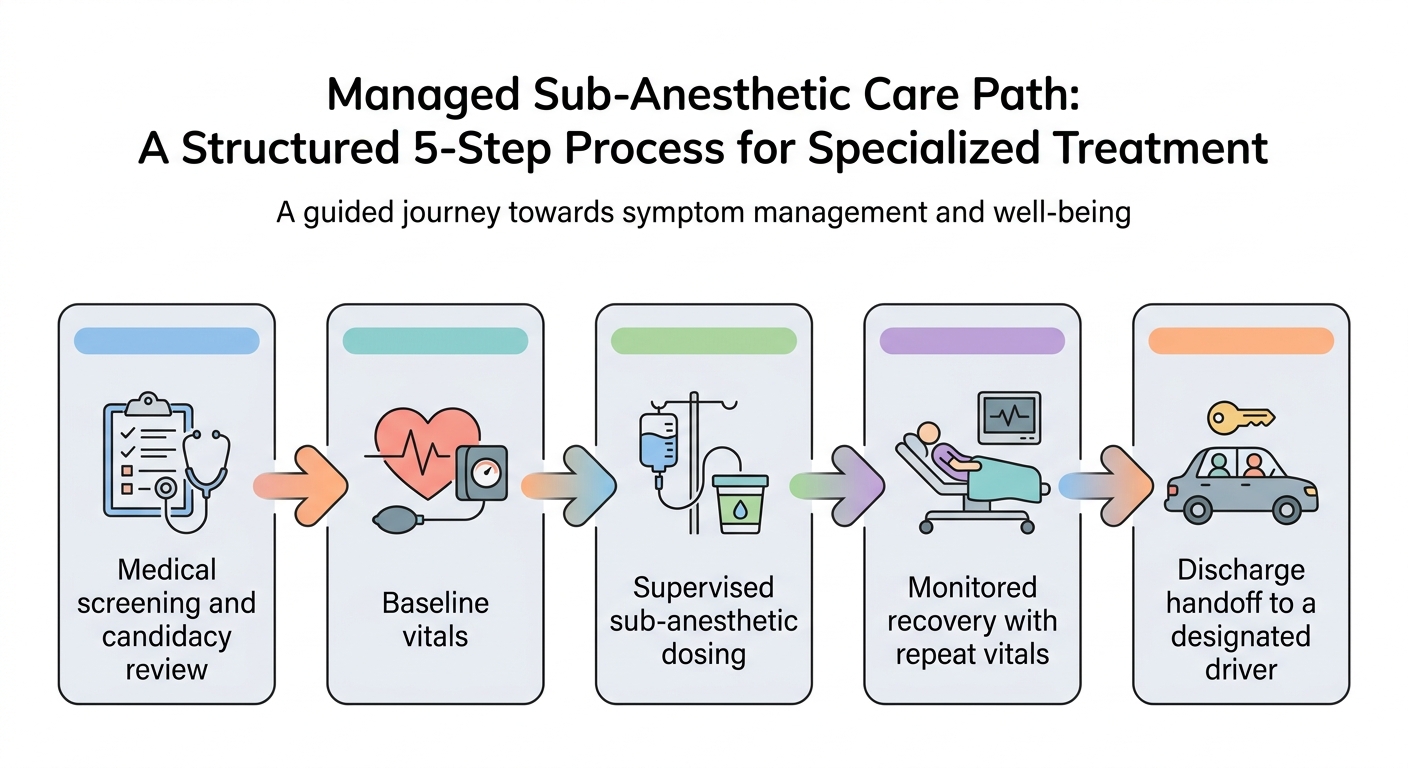
Standard-of-care practices at a well-run ketamine clinic in Boise or Eagle generally include:
- Medical screening for blood pressure history, cardiovascular conditions, psychiatric history, and the contraindications named in the esketamine label.
- Conservative dosing and slow delivery, with adjustments based on how you responded last time.
- Anti-nausea medication offered before dosing when appropriate.
- Continuous vital-sign monitoring throughout the session and into recovery.
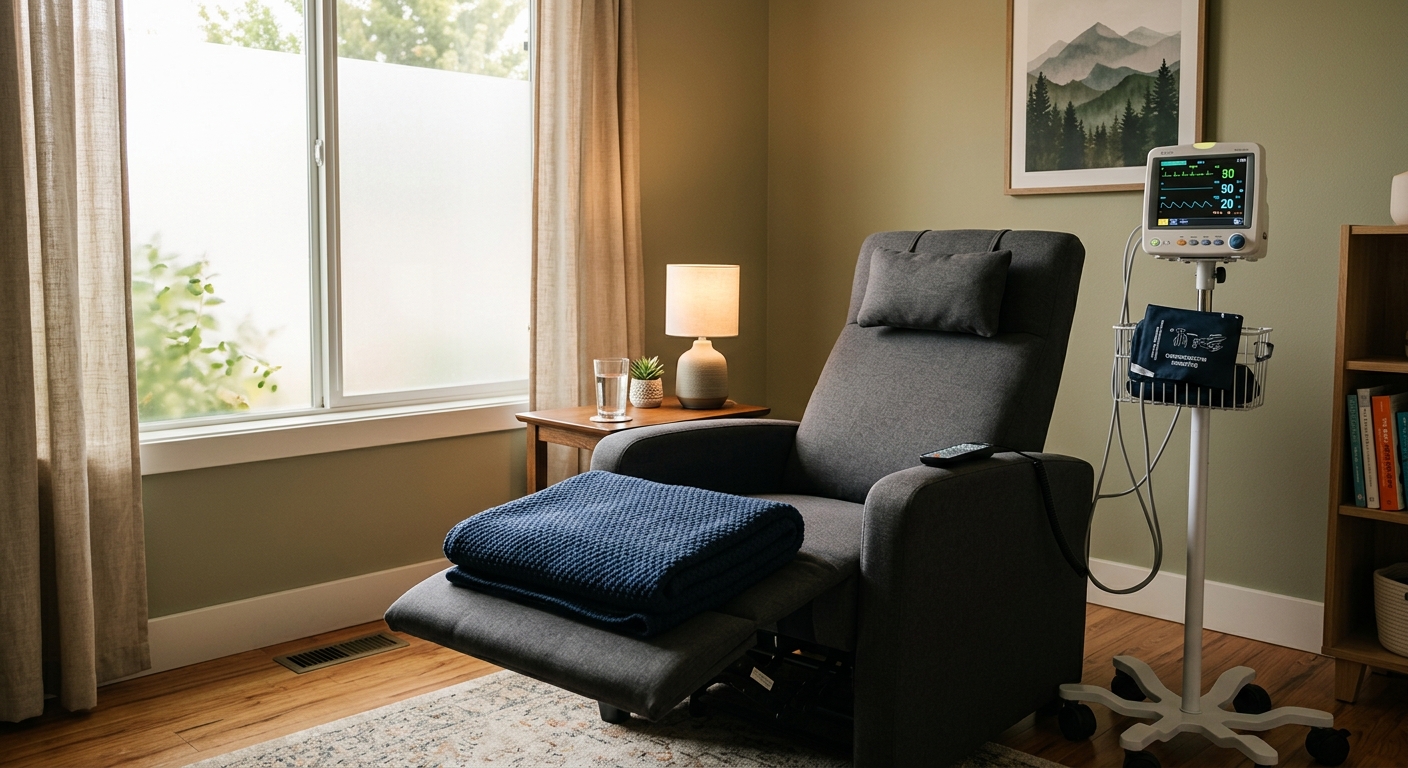
- A dim, quiet room with a reclining chair, blanket, and minimal interruption.
- A trained observer present, not a staff member checking in occasionally.
- A discharge handoff to your designated driver, plus clear instructions for the rest of the day.
Questions worth asking before you book anywhere, including a Caldwell or Nampa provider:
- Who stays in the room for the entire session?
- How are my blood pressure and heart rate monitored?
- What happens if I feel anxious mid-session?
- How do you decide my dose, and how is it adjusted?
- What's your protocol for reaching someone after hours?
If you're comparing IV against the nasal route, our overview of IV ketamine therapy in Boise and Eagle explains how monitored sub-anesthetic sessions are structured. Suitability for any ketamine therapy in Boise — whether for depression, PTSD, or chronic pain — is decided in a clinical consultation, and results vary between individuals.
Summary
Ketamine side effects during depression treatment are real, predictable, and largely confined to the session and the monitored recovery that follows it. Dissociation, dizziness, nausea, and a short-lived blood pressure rise sit at the top of the list for both IV infusion and esketamine nasal spray, with taste and nasal irritation unique to the spray. Long-term bladder and cognitive concerns come primarily from heavy recreational use, but they still belong in your monitoring plan if you move toward maintenance. The practical takeaways are simple: get screened honestly, arrange a ride, track how you feel between sessions, and call your clinic when something doesn't resolve.
Frequently Asked Questions
Are ketamine side effects worse than antidepressant side effects?
They're different in shape rather than simply worse. Ketamine's effects tend to be more noticeable but are concentrated in the session and monitored recovery window, while common SSRI side effects such as weight changes or sexual dysfunction are milder on any given day but can persist for as long as you take the medication. Neither profile is universally easier — it depends on what you can live with. Our breakdown of how antidepressant side effects compare walks through the trade-offs before you switch anything.
Can I drive home after a ketamine session for depression?
No. Plan for a ride both for IV infusions and nasal spray doses. The FDA prescribing information for esketamine instructs patients not to drive or operate machinery until the next day following restful sleep. Arrange transportation before your appointment, and don't plan to work, sign documents, or make significant decisions that evening.
Do side effects get milder with each infusion?
Many people report that later sessions feel more manageable, largely because the experience is familiar and clinicians fine-tune dose, rate, and environment after seeing how you responded. That said, intensity can still vary session to session depending on sleep, hydration, food intake, and stress levels that week. Report changes either way — smoother and rougher sessions are both useful information for your provider.
Which side effects mean I should call the clinic?
Call the same day for any of the following:
- Vomiting that continues after you leave the clinic
- Chest pain, severe headache, or shortness of breath
- Blood pressure that stays elevated on home readings
- Painful, bloody, or unusually frequent urination
- Confusion or dissociation that hasn't resolved by the next morning
- Any worsening of suicidal thoughts — contact your provider immediately, call or text 988, or go to the nearest emergency department
Will I remember the session, or does ketamine erase it?
Most people remember the session, though the memory can feel soft around the edges — more like recalling a vivid dream than a normal afternoon. At the sub-anesthetic doses used for depression, you stay awake and able to speak with staff the whole time. Some patients notice short gaps or a fuzzy sense of how much time passed, and that usually tightens up as the medication clears during the monitored recovery window.
Does eating before a session change the side effects?
It can, mostly where nausea is concerned. Many clinics ask patients to avoid a heavy meal in the hours before dosing and to follow whatever fasting window their provider specifies, since a full stomach makes nausea and vomiting more likely during the session. Hydration earlier in the day is usually encouraged. Follow your own clinic's written pre-session instructions rather than general advice — protocols differ, and yours is built around your route and dose.
Is Caldwell ketamine treatment different from what's offered in Boise or Eagle?
The medication and the side effect profile are the same wherever you go; what varies is how a given clinic screens, doses, and monitors. If you're searching for Caldwell ketamine options or comparing Nampa and Meridian providers, judge them on the practical details: who stays in the room, how vitals are tracked, how dose adjustments are decided, and how you reach someone after hours. Those answers tell you more about your likely experience than the address does.
How soon after a session can I go back to work?
Most clinics advise treating the rest of treatment day as time off. Dizziness, grogginess, and a slightly foggy head can linger into the evening even after you've been cleared for discharge, and the esketamine label's no-driving rule runs until the next day after a restful sleep. Plan your session for a day when you can rest afterward, and expect to be back to your normal routine the following morning. If you still feel off at that point, tell your provider before your next appointment.
What should I bring to a ketamine appointment?
Keep it simple: a current list of your medications and supplements, comfortable clothing, and a designated driver who can stay or return at discharge. Many patients also bring headphones or a chosen playlist, since a familiar sound environment can make the dissociative window feel less disorienting. Leave anything you'd need to sign, drive, or concentrate on for another day.
⚠️ This article is general education, not medical advice. Decisions about ketamine or esketamine treatment should be made with a qualified clinician who knows your history.
Information about third-party platforms reflects publicly available details at the time of writing and may have changed. Please verify directly with the provider. See our Terms of Use for more.