How to Prepare for a Ketamine Infusion: A 7-Day Checklist
Zora Neuro Spa Editorial · November 15, 2026
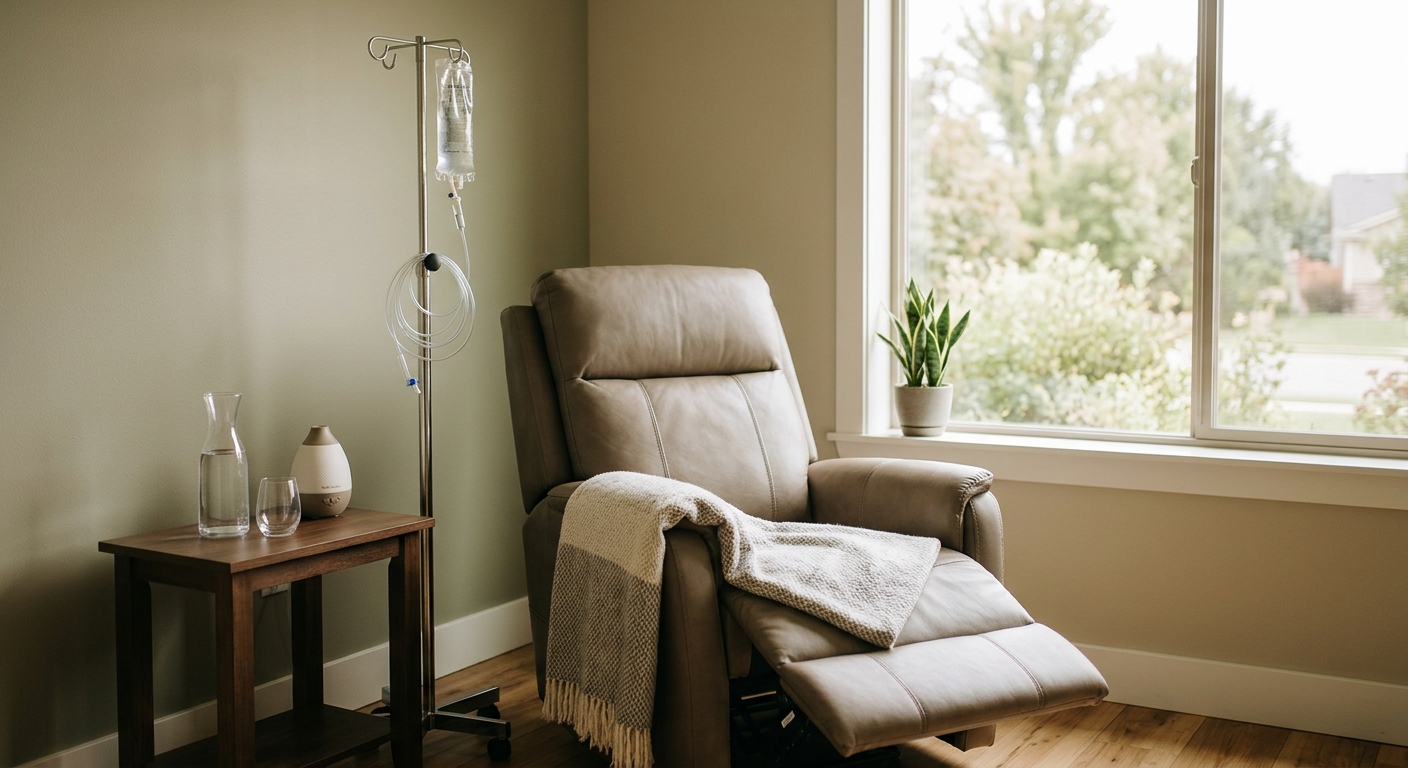
To prepare for a ketamine session, most of the work happens before you ever sit in the chair: fasting correctly, confirming your medication list with your prescriber, and locking in a ride home. This is a practical, logistics-first checklist for patients in Boise and Eagle — the week before, the morning of, and the hours after. It's written for first-timers who want to walk in knowing exactly what to do.
Quick Answer
To prepare for a ketamine infusion, follow your clinic's written fasting instructions (no solid food for a set window beforehand, clear liquids allowed until closer to your appointment), arrange a confirmed driver, and review every medication and supplement with your prescriber well in advance. Wear loose, comfortable layers with sleeves that roll above the elbow. Bring an eye mask, headphones, and a playlist. Block the rest of the day — you will not be driving.
TL;DR
- Fasting is a safety rule, not a suggestion. Ketamine can cause nausea, and an empty stomach lowers the risk of complications. Review the food and drink rules
- Never stop a psychiatric medication on your own — but do tell your prescriber about benzodiazepines, mood stabilizers, and stimulants before your first session. See what to discuss with your prescriber
- A driver is non-negotiable. No driving, machinery, or signing legal documents for the rest of the day. Check the transportation requirements
- Set and setting matter. An eye mask, headphones, and a pre-built playlist give you something to settle into. See the bring-and-wear checklist
- Prep differs slightly for Spravato. The nasal spray adds a required in-clinic observation period under FDA rules. Compare IV ketamine and Spravato prep
In This Article
- What Actually Happens in a Ketamine Session?
- What Should You Do in the 7 Days Before?
- Can You Eat or Drink Before a Ketamine Infusion?
- Which Medications Should You Pause Before Your Session?
- What Should You Bring and Wear?
- What Does the Day of Your Infusion Look Like, Hour by Hour?
- Do You Need Someone to Drive You Home?
- What Should You Plan for the Hours After?
- How Does Prep Differ for IV Ketamine vs Spravato?
What Actually Happens in a Ketamine Session?
A standard mood-indication infusion is short, monitored, and quiet. You sit or recline in a private room while a low dose runs through an IV over roughly 40 minutes, followed by a monitored recovery period before discharge.
A ketamine session refers to a single supervised appointment in which a clinician administers a controlled dose of ketamine and monitors your vital signs from start to discharge. Ketamine is an anesthetic agent that has been used clinically for decades and is given at much lower doses for mood and pain indications than for surgical anesthesia (StatPearls, NCBI Bookshelf).
During the infusion, staff check blood pressure, heart rate, and oxygen saturation at regular intervals. Ketamine can transiently raise blood pressure and heart rate, which is one reason monitoring is standard (StatPearls).
If you're mainly wondering about sensations rather than logistics, we cover what a ketamine infusion actually feels like separately. This article stays on preparation. For the local picture of how IV ketamine therapy in Boise and Eagle is structured, our service page lays out the clinical process.
What Should You Do in the 7 Days Before?
The week before your first session matters more for logistics and mindset than for physiology. Nothing dramatic has to change — but a handful of small decisions make the day itself far less stressful.
Work through these in order:
- Day 7 — Confirm the appointment and the driver. Get the date, arrival time, and address in writing. Ask who is picking you up and confirm it with that person directly. If you're still at the scheduling stage, our guide to booking your first ketamine appointment walks through intake paperwork.
- Day 6–5 — Build your medication list. Write down every prescription, over-the-counter product, and supplement, with doses. Send it to your prescribing clinician and the clinic ahead of time, not at check-in.
- Day 4 — Write one intention or symptom target. A single sentence is enough: what you'd most like to track. A simple 0–10 rating for your main symptom gives you a baseline to compare against later.
- Day 3 — Scale back alcohol. Clinics commonly ask patients to be alcohol-free before a session; ask yours for their specific requirement and follow it.
- Day 2 — Protect your sleep. Arriving exhausted makes nausea and anxiety harder to manage.
- Day 1 — Re-read the clinic's written prep instructions. Set an alarm for your fasting cutoff and pack your bag the night before.
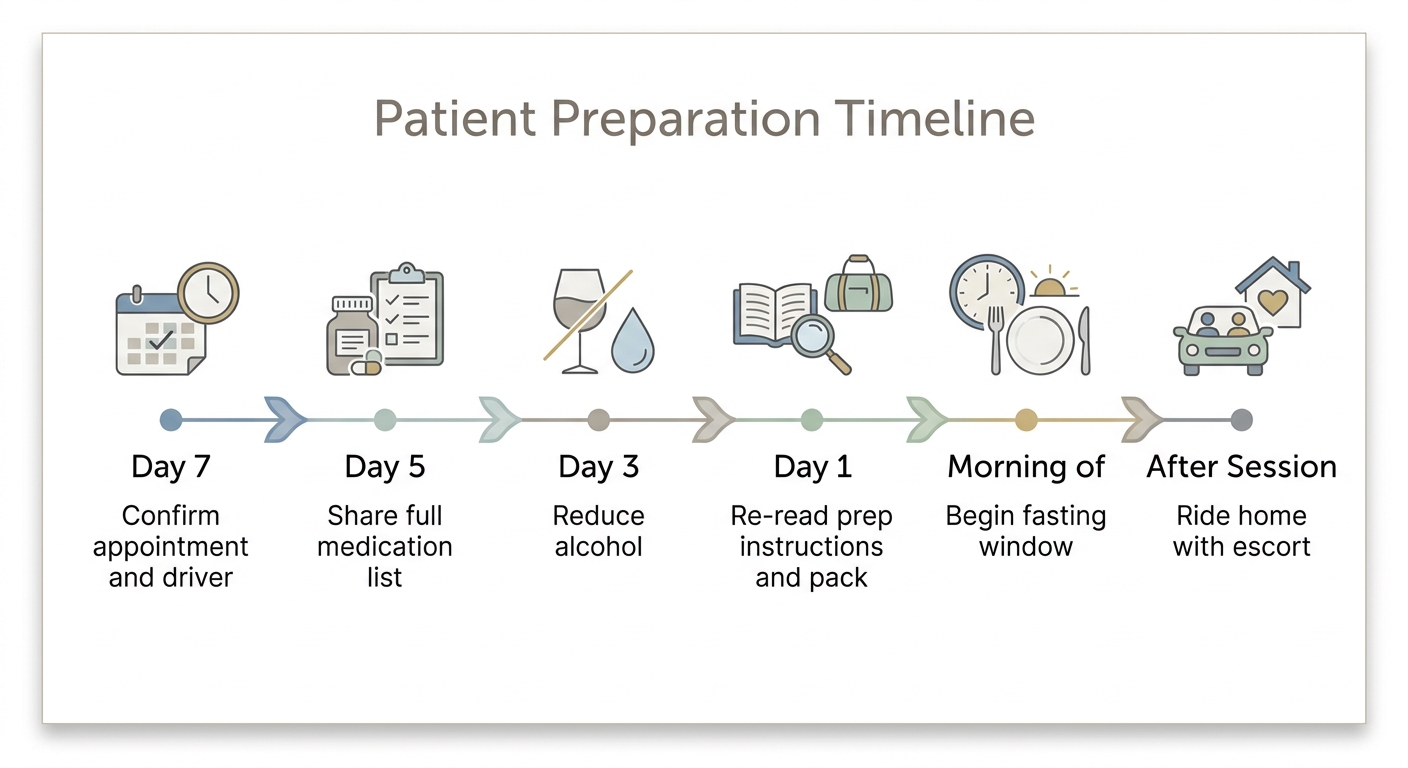
Key takeaway: The week before is about removing friction — a confirmed driver, a shared medication list, and a written fasting cutoff solve most first-session stress.
Can You Eat or Drink Before a Ketamine Infusion?
No — not within the fasting window your clinic gives you. Ketamine can cause nausea and vomiting, and an empty stomach reduces the risk of complications if that happens (StatPearls).
A fasting window is the period before a procedure during which you take nothing by mouth except what your clinic specifically allows. Clinics generally follow standard pre-procedure fasting practice: a longer window for solid food, a shorter one for clear liquids. The exact hours vary by clinic and by patient, so the written instruction you receive is the one that counts.
| Food or drink | Typical instruction pattern | Why |
|---|---|---|
| Heavy or fatty meal | Longest window — eat it the night before | Slowest to empty from the stomach |
| Light meal, snacks | Solid-food window | Counts as food regardless of portion size |
| Milk, cream, smoothies, yogurt | Solid-food window | Dairy is treated as food, not a clear liquid |
| Water, black coffee, clear juice | Shorter window; often allowed closer in | Clear liquids clear the stomach faster |
| Alcohol | Avoid in the days before — ask your clinic | Interacts with sedating medication |
| Cannabis, including edibles | Discuss with your provider before the session | Affects how you respond to sedation |
⚠️ Don't plan around nausea on your own. Anti-nausea medication is often part of a clinic's standard protocol, and it is given by the clinical team — not something to self-dose beforehand. Tell the staff at check-in if you're prone to motion sickness or post-anesthesia nausea.
If you take daily medication with food, ask your clinic how to handle that specific pill on session morning. That's a question with a real answer, and it's better asked three days early than three minutes before the IV goes in.
Which Medications Should You Pause Before Your Session?
None — not on your own. Stopping a psychiatric medication without supervision can cause withdrawal effects and destabilize symptoms. The correct move is to disclose everything and let your prescriber decide.
That said, a few categories come up repeatedly in pre-session conversations:
- Benzodiazepines — the most common topic. Benzodiazepine blunting refers to the hypothesis that benzodiazepines may dampen or delay the brain's response to ketamine. Published findings on this are mixed and not settled, and any change to timing or dose is a decision for your prescriber alone.
- Lamotrigine and other mood stabilizers — worth flagging so your clinician knows the full picture before dosing.
- Stimulants — share dose and timing, since they affect heart rate and blood pressure.
- Blood pressure medication — a screening question, not a day-of decision. Ketamine can transiently raise blood pressure (StatPearls), so uncontrolled hypertension is assessed during consultation.
- SSRIs and SNRIs — generally continued through treatment. If you're weighing a change for other reasons, we cover antidepressant side effects worth weighing elsewhere.
⚠️ Supplements count. St. John's wort, high-dose melatonin, and sedating herbal blends belong on your list alongside prescriptions.
Suitability for ketamine therapy in Boise is decided in a clinical consultation, where your full history, blood pressure, and medication list are reviewed together. Individual circumstances differ, and not everyone is a candidate.
What Should You Bring and Wear?
Dress for a nap in a cool room, not for a meeting. Loose layers, sleeves that roll above the elbow, and shoes you can slip off cover almost everything.
Set and setting refers to your internal state and your physical environment during a session — the two things you can shape before the dose begins. A clinic controls the room; you control what you bring into it.
Bring:
- Photo ID and insurance card, if applicable
- Your written medication and supplement list
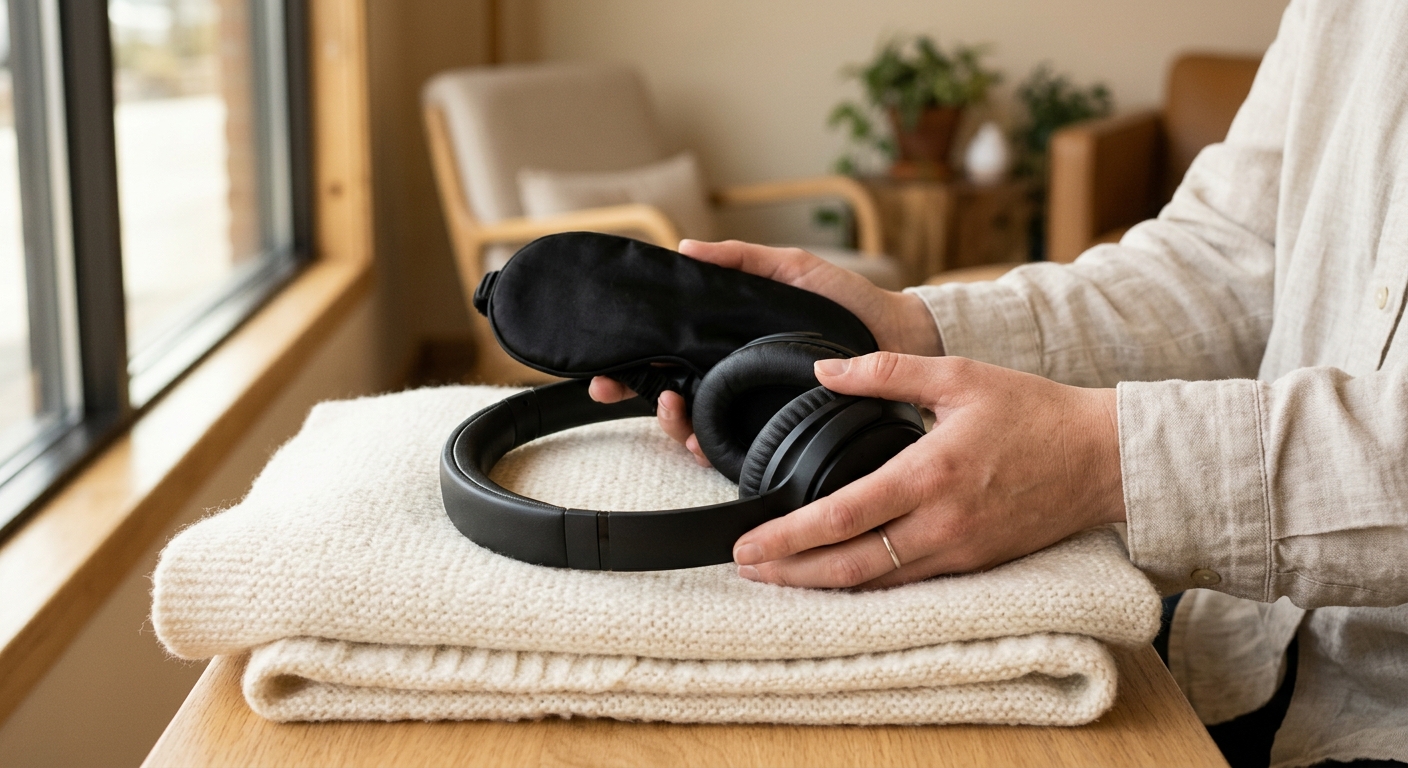
- An eye mask — blocking light helps most people settle
- Over-ear headphones or earbuds, fully charged
- A downloaded playlist, so nothing depends on Wi-Fi
- A water bottle and a light snack for afterward
- A sweater or light blanket
Leave at home:
- Tight sleeves or restrictive clothing
- Contact lenses, if glasses are easier for you
- Your work laptop — you will not be working afterward
- Jewelry you'd rather not keep track of
For music, aim for a continuous instrumental or ambient set that runs at least as long as your scheduled infusion plus recovery. Curated session playlists built for supervised psychedelic and ketamine research settings follow the same idea: steady, non-lyrical, no abrupt transitions. Some people prefer silence — that's a valid choice too.
What Does the Day of Your Infusion Look Like, Hour by Hour?
Plan on roughly one and a half to two hours door to door for a standard mood infusion. Most of that is check-in, monitoring, and recovery — the infusion itself is the shortest part.
A typical flow:
- Arrive 15–20 minutes early. Paperwork, consent review, and a chance to ask last-minute questions.
- Vitals and screening. Blood pressure, heart rate, and a quick symptom check-in.
- IV placement. A small catheter, usually in the hand or forearm.
- Infusion with monitoring. You settle in with your eye mask and playlist while staff check vitals at regular intervals.
- Recovery. The IV comes out and you rest in the room until the clinical team clears you.
- Discharge to your escort. Written aftercare instructions, and a plan for the next appointment.
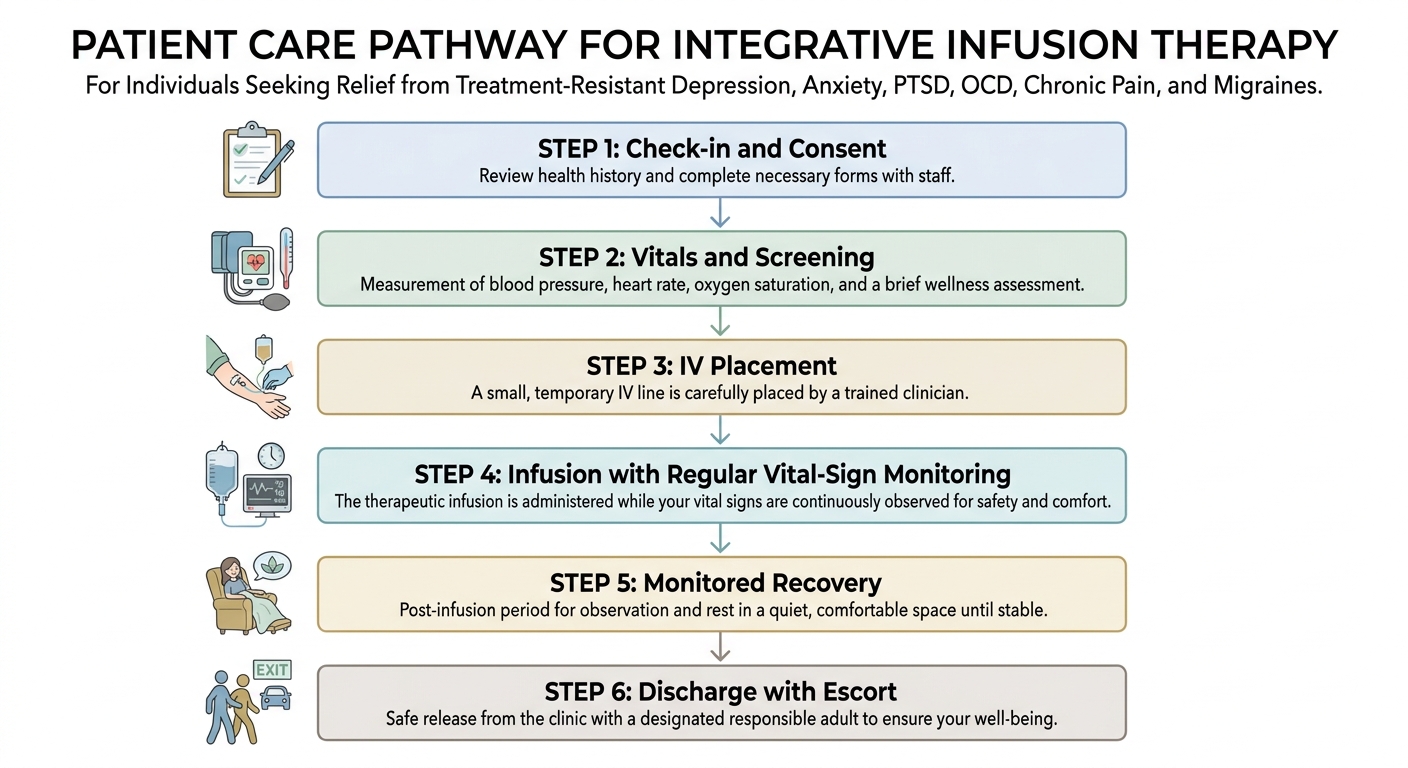
The part most first-timers underestimate is how much easier the day feels once the sequence is known. Not knowing whether you'll be alone, how long you'll be in the chair, or who signs you out is its own source of anxiety — and it's avoidable. A structured intake at a Boise or Eagle clinic should walk you through this timeline before you book, not on arrival.
At Zora Neuro Spa, consultation covers candidacy screening, the monitoring protocol used during each ketamine session, and the discharge requirements, so the schedule is settled before your first appointment. If you're exploring ketamine-assisted psychotherapy instead, what a ketamine session involves in that format differs in length and structure.
Key takeaway: The infusion is the short part. Build your schedule around the full door-to-door window, plus the rest of the day off.
Do You Need Someone to Drive You Home?
Yes. Every reputable clinic requires a confirmed escort, and you should not drive, operate machinery, or sign legal or financial documents for the remainder of the day. The FDA-approved labeling for esketamine instructs patients not to drive or operate machinery until the following day after restful sleep (SPRAVATO prescribing information) — IV clinics apply comparable caution.
Practical options for Boise and Eagle patients:
- A friend or family member who can come inside at discharge
- A rideshare with a companion already present — not a solo pickup
- A scheduled caregiver, if you use home-care support
⚠️ Many clinics will not discharge a patient to a solo rideshare with no named escort. Confirm the policy when you book, not when you're being wheeled toward the door. Discharge rules are one of the practical differences worth checking — see how to choose a ketamine clinic in Boise for the rest of the vetting list.
Key takeaway: Treat session day as a no-driving day from the moment you arrive until the next morning.
What Should You Plan for the Hours After?
Block the rest of the day. No meetings, no errands, no major decisions. Most of what you need afterward is unglamorous: quiet, hydration, light food, and somewhere comfortable to land.
A simple aftercare checklist:
- Eat something light once nausea has fully settled
- Hydrate steadily rather than all at once
- Write for five minutes within a few hours, while impressions are fresh
- Log your symptom rating on the same 0–10 scale you used before the session
- Skip alcohol for the rest of the day
- Go to bed early — sleep is part of the plan, not a bonus
Keep your clinic's phone number visible. Call if nausea persists, a headache won't ease, or you notice symptoms your discharge sheet flagged. Our guide to side effects worth tracking at home covers what to note and when to pick up the phone.

How Does Prep Differ for IV Ketamine vs Spravato?
Preparation overlaps on the essentials — fasting, a driver, a cleared schedule — but the two routes differ in session structure and paperwork. Spravato (esketamine) nasal spray is self-administered under direct observation, with no IV placement, and is dispensed only through a restricted FDA program.
| Prep item | IV ketamine | Spravato (esketamine) |
|---|---|---|
| Fasting | Follow clinic instructions | Label advises avoiding food before dosing and limiting liquids beforehand (FDA label) |
| IV placement | Yes | No — nasal spray, self-administered under supervision |
| Post-dose monitoring | Clinic-determined recovery period | At least 2 hours of in-clinic observation required (FDA label) |
| Driving | Escort required; no driving that day | No driving until the next day after restful sleep (FDA label) |
| Program requirements | Clinic protocol | Dispensed only through a restricted REMS program (FDA label) |
| Insurance | Commonly cash-pay | Often involves prior authorization |
| What to bring | ID, med list, eye mask, headphones | Same, plus a longer book or playlist for the observation window |
The practical planning difference is time. A Spravato appointment in Boise runs longer because of the required observation period, so build a bigger block into your calendar. If you're weighing the two routes, we cover esketamine for treatment-resistant depression in Boise in detail.
Summary
Preparing for a ketamine session comes down to five decisions you can make this week: follow your clinic's fasting instructions exactly, share your full medication and supplement list with your prescriber, confirm a named driver, pack comfort items and a playlist, and clear the rest of session day. Everything else — dosing, monitoring, candidacy — is decided in a clinical consultation, where results and suitability are assessed individually. Good preparation doesn't change the medicine. It changes how much of your attention is free for the appointment itself.
Frequently Asked Questions
Can I drink coffee before a ketamine infusion?
Black coffee is usually treated as a clear liquid and is often permitted closer to your appointment than food. Adding milk, cream, or a flavored syrup moves it into the solid-food category. Your clinic's written fasting instruction sets the actual cutoff — confirm it rather than assuming.
How long does a ketamine session take from start to finish?
For a standard mood infusion, plan on roughly one and a half to two hours door to door: check-in and vitals, about 40 minutes of infusion, then monitored recovery and discharge. Chronic pain protocols are typically scheduled for longer sessions. Ask your clinic for the exact appointment length when you book.
Should I stop my antidepressant before ketamine?
No. SSRIs and SNRIs are typically continued through a course of ketamine therapy. Only your prescribing clinician should change a psychiatric medication, and never in the days before a session without their direction. Bring your full list to consultation so everything is reviewed together.
What if I'm anxious about losing control during the session?
Tell the clinical team before the IV is placed. Dose and infusion rate can be adjusted, and supportive medication may be available. Dissociation — a temporary sense of detachment from your body or surroundings — is tied to the infusion itself and is monitored throughout (StatPearls). Saying you're nervous is useful clinical information, not an inconvenience.
Can I bring someone into the treatment room with me?
Policies vary by clinic. Many allow a support person for a first session and ask them to wait in the lounge for later appointments, since a quiet room supports the experience. Ask during your consultation so your companion knows what to expect on the day.
Information about third-party platforms reflects publicly available details at the time of writing and may have changed. Please verify directly with the provider. See our Terms of Use for more.