What's Actually in a Myers' Cocktail IV
Zora Neuro Spa Editorial · October 9, 2026
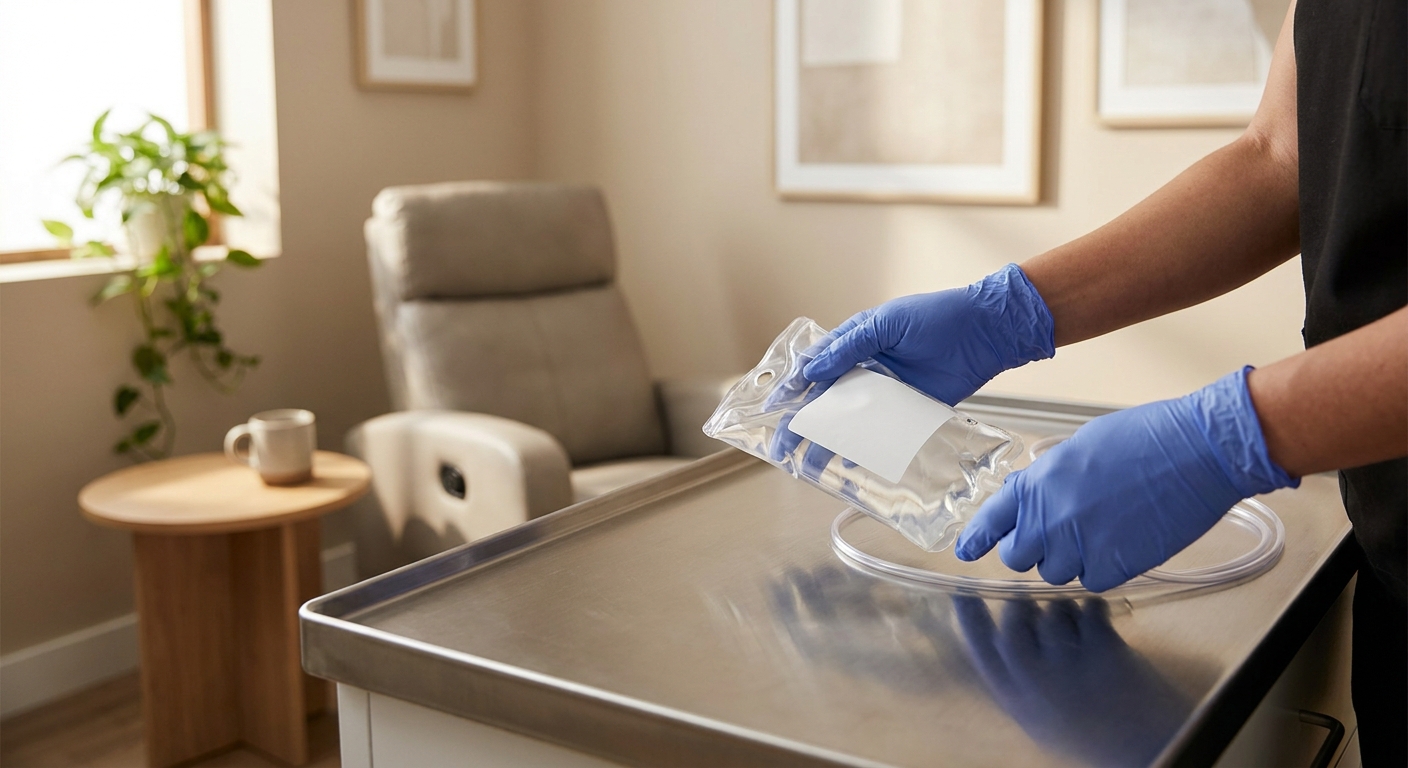
Walk into almost any IV therapy clinic in Boise or Eagle and the Myers' Cocktail is on the menu — usually described with words like "classic" or "original" and not much else. This guide breaks down the actual Myers Cocktail ingredients one by one, explains what each nutrient does, and gives an honest read on what the research does and doesn't support. You will also find the realistic Myers cocktail benefits, the side effects worth knowing about, what drives the cost of a vitamin IV around Boise, and how often people actually need one.
Quick Answer: What Is in a Myers' Cocktail?
A Myers' Cocktail is an intravenous micronutrient blend built from seven core components: magnesium, calcium, vitamin B12 (hydroxocobalamin), vitamin B6 (pyridoxine), vitamin B5 (dexpanthenol), a B-complex supplying B1, B2 and B3, and vitamin C — all diluted in sterile water or saline. It is named for Dr. John Myers, a Baltimore physician who used intravenous nutrient blends in the 1960s and 1970s. Physician Alan Gaby later published a standardized version of the formula in 2002, which is the recipe most clinics work from today.
TL;DR
- The formula is seven well-known nutrients in sterile fluid — no proprietary mystery blend. See the full ingredient breakdown
- Magnesium is the ingredient most responsible for the warm flush and vitamin taste people notice mid-drip. Read what each nutrient does
- Evidence is strongest where a nutrient shortfall or a magnesium-responsive mechanism exists, and thinner for broad "energy" claims. Review the evidence grading
- Screening matters more than the menu — kidney disease, G6PD deficiency and certain heart medications change the plan. Check the safety cautions
- Frequency follows your goal, not a fixed schedule. Compare cadence by goal
In This Article
- What Are the Core Myers Cocktail Ingredients?
- What Does Each Vitamin and Mineral Actually Do?
- Why Is It Given by IV Instead of a Pill?
- Does the Myers' Cocktail Actually Work?
- What Benefits Do People Report Most Often?
- What Are the Side Effects and Who Should Avoid It?
- What Does a Myers' Cocktail Cost in Boise and Eagle?
- How Often Should You Get a Myers' Cocktail?
- How Do You Find Myers' Cocktail IV Therapy Near You?
What Are the Core Myers Cocktail Ingredients?
The published formula contains seven nutrient components plus a sterile diluent. Every one of them is an individually approved injectable nutrient — the "cocktail" is simply the combination.
| Component | Common injectable form | What it contributes |
|---|---|---|
| Magnesium | Magnesium chloride | The largest mineral component; smooth-muscle and enzymatic support |
| Calcium | Calcium gluconate | Balances magnesium; supports cardiac and neuromuscular signaling |
| Vitamin B12 | Hydroxocobalamin | Nerve function and red blood cell formation |
| Vitamin B6 | Pyridoxine | Amino acid and neurotransmitter metabolism |
| Vitamin B5 | Dexpanthenol | Precursor to coenzyme A, used in energy metabolism |
| B-complex (B1, B2, B3) | Thiamine, riboflavin, niacinamide | Converting carbohydrates and fats into usable energy |
| Vitamin C | Ascorbic acid | Collagen synthesis, antioxidant activity, immune cell function |
| Diluent | Sterile water or normal saline | Carries the nutrients and sets the infusion volume |
Dexpanthenol is the injectable form of vitamin B5 (pantothenic acid). The body converts it into pantothenic acid, which is then used to build coenzyme A — a molecule involved in nearly every step of energy metabolism.
Two things vary from clinic to clinic. The first is quantity: the published recipe gives ranges rather than single fixed doses, and providers adjust within those ranges based on your history, tolerance and how fast the infusion runs. The second is customization — many clinics offer the base blend plus optional additions, so the drip you receive in Eagle may not be identical to one offered elsewhere.
That is why it is worth reading a clinic's posted formula rather than assuming. You can see the local version on the Myers' Cocktail IV in Eagle, Idaho page.
⚠️ Watch for this: A clinic that won't tell you the exact contents of your vitamin IV is a red flag. These are standard, named nutrients — there is no trade secret to protect.
What Does Each Vitamin and Mineral Actually Do?
Each ingredient maps to a specific metabolic job, and the combination is complementary rather than random.
What does the magnesium do?
Magnesium is a cofactor in hundreds of enzymatic reactions across the body, including those that handle energy production and muscle contraction. It also relaxes smooth muscle — the tissue lining blood vessels and airways — which is the mechanism behind most of the conditions the formula was historically used for. Magnesium is also the ingredient that produces the warm, flushing sensation people describe during a drip.
Why is calcium included alongside magnesium?
Calcium and magnesium work as a physiological pair. Magnesium generally relaxes and calcium generally excites neuromuscular and cardiac tissue, so calcium gluconate is included to keep that balance steady while a meaningful dose of magnesium goes in.
What do the B vitamins contribute?
The B vitamins in the blend are all involved in turning food into usable cellular energy, but each has its own role:
- Thiamine (B1) and riboflavin (B2) — central to extracting energy from carbohydrates and fats.
- Niacinamide (B3) — a building block of NAD, a coenzyme used throughout cellular energy production.
- Dexpanthenol (B5) — feeds coenzyme A synthesis.
- Pyridoxine (B6) — required for making neurotransmitters including serotonin and dopamine.
- Hydroxocobalamin (B12) — supports myelin maintenance on nerves and healthy red blood cell production.
Hydroxocobalamin is a naturally occurring form of vitamin B12 used in injections and infusions. It binds plasma proteins readily, which is one reason clinicians often prefer it to cyanocobalamin for parenteral use.
What role does vitamin C play?
Vitamin C does three distinct jobs in this blend: it is required for collagen cross-linking, it functions as a water-soluble antioxidant, and it accumulates in white blood cells where it supports normal immune cell function. It is also the ingredient most often increased when someone wants a higher-dose version of the drip.
Key takeaway: The blend is complementary by design — minerals for neuromuscular signaling, B vitamins for energy metabolism, and vitamin C for structural and antioxidant roles. If you want to compare it against other formulations, the IV nutrition therapy overview lays out each option side by side.
Why Is It Given by IV Instead of a Pill?
Intravenous delivery bypasses the digestive tract entirely, which changes what blood concentrations are achievable. With oral vitamin C, intestinal transporters saturate — past a certain intake, absorption efficiency drops and extra grams pass through rather than raising blood levels further. Oral magnesium has a different ceiling: higher doses commonly cause loose stools before they meaningfully raise serum levels.
Bioavailability refers to the proportion of a nutrient that reaches the bloodstream in an active form. An infusion delivers nutrients directly into circulation, so the absorption step is skipped altogether.
Two honest caveats belong next to that mechanism:
- Higher blood levels are not automatically better outcomes. A plausible mechanism is a starting point, not proof of clinical benefit.
- The elevation is temporary. Water-soluble vitamins are cleared by the kidneys, so levels fall over the hours after a drip. There is more on that pattern in this breakdown of how long IV vitamin infusions last.
A concrete way to picture where the route actually matters: someone with celiac disease or Crohn's disease may be taking an oral B12 supplement daily and still show a low serum B12, because the absorption step itself is impaired. Someone who has had bariatric surgery sits in the same category. In those situations the IV route is not a shortcut — it is the only route that reliably works. By contrast, a healthy office worker who eats a reasonable diet is unlikely to be absorption-limited at all.
For most healthy people eating a varied diet, food and oral supplements cover daily needs. IV delivery becomes relevant mainly when absorption is impaired, when oral dosing is poorly tolerated, or when a provider is aiming for a short-term concentration that swallowing cannot reach.
Does the Myers' Cocktail Actually Work?
The honest answer is that the evidence is mixed and condition-specific. It is strongest where there is an identified nutrient shortfall or a magnesium-responsive mechanism, and weakest for broad wellness claims.
Most of what is written about the Myers Cocktail ingredients traces back to clinical observation rather than controlled trials. Dr. Gaby's 2002 publication described a large body of case observations in conditions including fatigue, fibromyalgia, migraine and asthma — valuable as a clinical record, but case series cannot separate treatment effect from placebo or natural recovery.
The most-cited controlled test came later: A 2009 randomized controlled trial of the Myers' Cocktail in fibromyalgia, published in the Journal of Alternative and Complementary Medicine, reported that participants improved in both the infusion group and the placebo group, with no statistically significant difference between them. in both the infusion group and the placebo group, with no statistically significant difference between them. That result does not mean nobody felt better. It means the trial could not attribute the improvement to the formula itself.
| Claim | Mechanism plausible? | Human trial support | Reasonable verdict |
|---|---|---|---|
| Corrects a documented nutrient deficiency | Yes | Strong for the individual nutrients | Well supported when a deficiency is confirmed |
| Reduces fibromyalgia symptoms | Yes (magnesium) | Tested; no significant difference vs placebo in the 2009 RCT | Unproven as a formula |
| Helps migraine patterns | Yes (magnesium) | Magnesium studied separately for migraine; the full blend has not been | Promising mechanism, formula untested |
| Supports acute asthma | Yes (IV magnesium is used in hospital settings) | Studied for magnesium alone, not the cocktail | Do not substitute for emergency care |
| General "energy" or wellness | Limited | Not established | Patient-reported, not proven |
A fair reading: individual components of the blend have real, well-documented physiology, and magnesium in particular is studied in its own right. The specific seven-nutrient combination, given as a wellness infusion, has not been through the volume of trials that would let anyone promise a result. Results vary between individuals, and suitability is a clinical judgment. The broader picture is covered in this guide to the benefits of IV nutrition therapy.
Key takeaway: Treat the Myers' Cocktail as a supportive therapy with plausible mechanisms and limited controlled evidence — not as a treatment for a diagnosed medical condition.
What Benefits Do People Report Most Often?
Some patients report feeling less fatigued, recovering more comfortably after illness or dehydration, or noticing fewer migraine days, though these are anecdotal, patient-reported experiences and are not proven clinical outcomes; results vary and are not typical., though these are anecdotal reports rather than proven clinical outcomes. These are patient-reported experiences, not proven clinical endpoints, and individual results vary.
Matching the formula to your actual goal matters more than picking the most famous name on the menu:
| Drip type | Primary focus | Best matched to |
|---|---|---|
| Myers' Cocktail | Broad micronutrient blend with magnesium and vitamin C | General wellness support, post-illness recovery, migraine-prone stretches |
| Quench hydration IV | Fluid and electrolyte replacement | Dehydration, heat exposure, travel, post-exertion |
| Glutathione | Antioxidant, often added to another drip | Skin-focused and antioxidant goals |
| NAD+ | Cellular coenzyme infusion | Longevity and cellular energy interests |
Three illustrative situations show how that matching works in practice:
- The week after a bad stomach bug. Fluids and electrolytes are the actual deficit here. A hydration-focused drip is often the closer match, and the Myers' blend becomes relevant mainly if food intake has been poor for days.
- A migraine-prone stretch. Magnesium is the component with the most independent research behind it for migraine, so this is the pattern where people most often ask about a Myers' Cocktail — and where a pain-specific formulation may fit even better.
- Confirmed low B12 with an absorption problem. This is the clearest case for IV therapy, because the goal is objective and measurable. Repeat labs, not how you feel on a Tuesday, tell you whether it is working.
Glutathione is a frequent add-on request, though its goals differ from the Myers' blend — this explainer on glutathione IV drip benefits covers what it is and isn't for.
What Are the Side Effects and Who Should Avoid It?
Most reported side effects are mild and short-lived. The common ones:
- Warmth or flushing — from magnesium, especially when the infusion runs quickly.
- A metallic or vitamin taste — typically from the B-complex and magnesium, lasting a minute or two.
- Lightheadedness — usually rate-related and resolved by slowing the drip.
- Bruising, soreness or swelling at the IV site — the ordinary risk of any IV line.
The cautions that genuinely change the plan are different, and they are why a licensed provider should review your history before your first infusion rather than after:
- Kidney disease or dialysis — impaired clearance of magnesium and vitamin C.
- History of oxalate kidney stones — vitamin C is metabolized partly to oxalate.
- G6PD deficiency — an enzyme deficiency associated with red blood cell breakdown risk with high-dose vitamin C; providers often test before high-dose protocols.
- Heart block or significant arrhythmia — magnesium and calcium both affect cardiac conduction.
- Digoxin therapy — intravenous calcium can increase the risk of digoxin toxicity.
- Pregnancy or breastfeeding — proceed only with your OB provider's clearance.
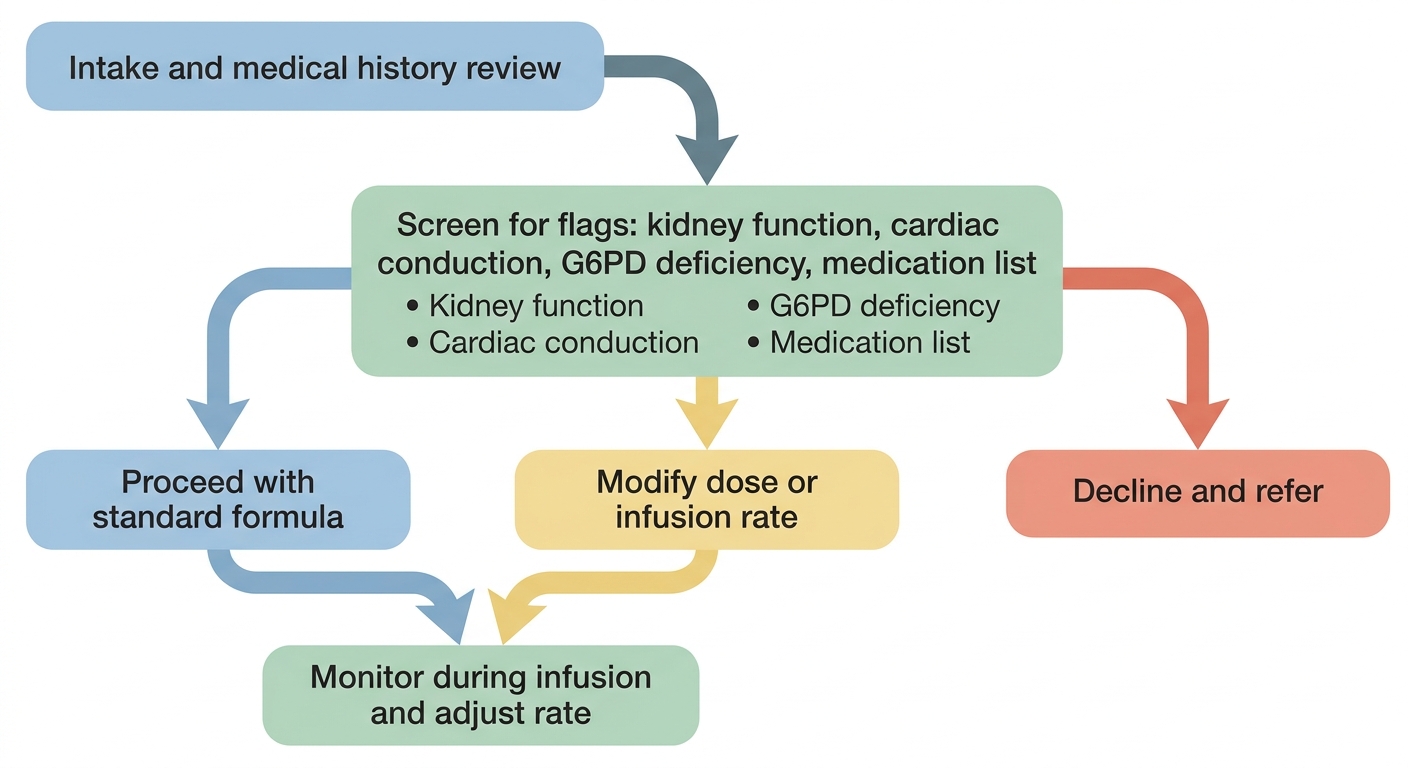
⚠️ Important: An IV drip is a medical procedure, not a spa add-on. Infusing magnesium into someone with undiagnosed kidney impairment or a conduction abnormality is where real risk lives — which is exactly what a pre-infusion review is designed to catch.
At our Eagle clinic, the same medical team that oversees ketamine and esketamine services reviews IV nutrition patients, and the screening and monitoring steps are described in detail on what to expect from IV nutrition.
What Does a Myers' Cocktail Cost in Boise and Eagle?
Pricing across the Treasure Valley varies by clinic, and wellness infusions are generally paid out of pocket — insurance rarely covers them because they are not treating a billable diagnosis. Rather than quote a figure that drifts out of date, here is what actually drives the number:
| Cost factor | Why it moves the price |
|---|---|
| Nutrient quantity | Higher vitamin C or magnesium volumes increase ingredient cost |
| Level of clinical oversight | A licensed provider on site and pre-infusion screening cost more than a drip-only model |
| Chair time | Longer infusions occupy a room and a nurse for longer |
| Add-ons | Glutathione, extra B12 or additional vitamin C are usually priced separately |
| Packages or memberships | Multi-session plans typically lower the per-drip price |
| Setting | In-clinic suites and mobile services are priced differently |
A concrete example of how those factors stack: two providers can both advertise a "Myers' Cocktail." One is a mobile visit with a base vitamin C quantity, a short infusion and no provider chart review. The other is an in-clinic infusion with a medical history review beforehand, a higher vitamin C dose, longer chair time and a glutathione add-on. Same name on the menu, two meaningfully different products — and the price gap between them is not arbitrary.
The cheapest drip in town is not automatically the best value. What you are paying for, beyond the nutrients themselves, is pharmacy-sourced sterile compounding, a provider who reviewed your chart, and staff equipped to respond if something goes wrong.
For current figures, check the published IV nutrition menu and pricing rather than relying on a range quoted in an article.
Key takeaway: Compare Myers cocktail cost by what is actually in the bag and who is supervising it — not by the headline number alone.
How Often Should You Get a Myers' Cocktail?
Frequency follows the goal. There is no universal schedule, and no evidence base supporting indefinite weekly infusions for a healthy person.
| Goal | Typical starting cadence | Typical adjustment |
|---|---|---|
| Acute support (illness recovery, travel, a rough migraine stretch) | One session, occasionally a second within the same week | Stop once the episode resolves |
| Ongoing symptom pattern (fatigue, recurring migraines) | A short series spaced a week or two apart | Space further out as symptoms stabilize |
| General wellness maintenance | Occasional, several weeks apart | Reassess value honestly after a few months |
| Confirmed deficiency | Guided by lab values and your provider | Repeat labs rather than guessing |
Gaby's published approach followed a similar logic: more frequent infusions during a symptomatic phase, then progressively wider spacing as things settled.
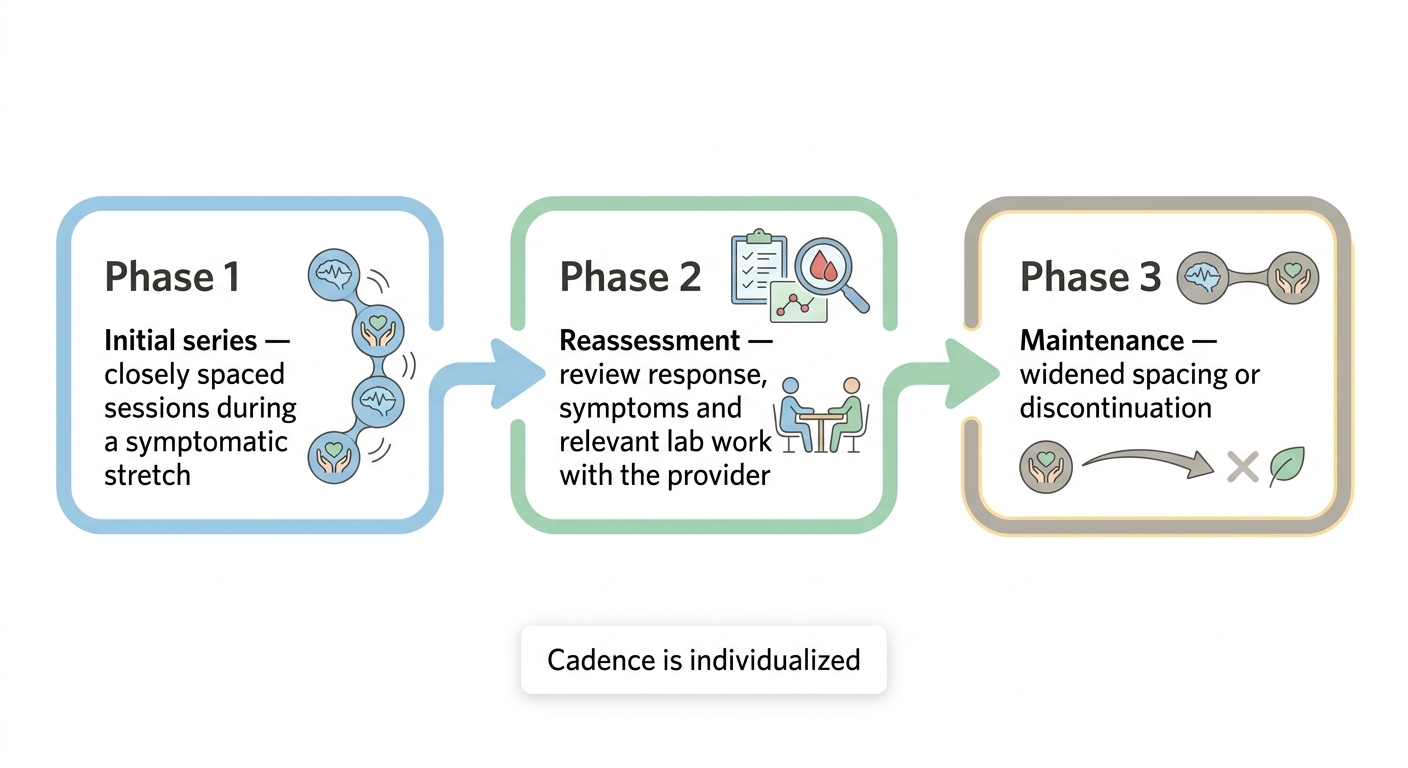
Two practical notes. First, lab work for B12, vitamin D and magnesium gives you an objective reason to continue or stop — otherwise you are relying entirely on how you feel on a given week. Second, if your goal is centered on pain or migraine patterns, ask whether a different formulation fits better; the Relief Reboot IV therapy is built around that use case.
How Do You Find Myers' Cocktail IV Therapy Near You?
Look for a clinic where a licensed medical provider reviews your history before the first infusion — that single criterion filters out most of the risk. Searching "myers cocktail iv therapy near me" will surface everything from medical clinics to mobile services, and the differences between them are real.

Ask any Boise, Eagle or Meridian provider these questions before booking:
- Who reviews my medical history, and when? It should happen before the IV is placed, not during.
- Can I see the exact formula and amounts? A reputable clinic will show you.
- Where do your ingredients come from? Pharmacy-sourced, sterile-compounded preparations only.
- Who places and monitors the IV? Licensed clinical staff, present for the duration.
- What is your plan if I react badly? Every infusion site should have a clear answer.
- Will you screen for kidney function or G6PD if my history warrants it?
- How do you decide whether to repeat? Look for reassessment, not an automatic subscription.
Key takeaway: The questions that matter are about oversight and sourcing — not about which menu has the most creative drip names.
Our IV nutrition suite in Eagle serves the greater Boise area, and the same clinical team that runs our ketamine clinic serving Boise and Eagle oversees infusion patients.
Where This Information Comes From
This guide is built on three things, and it is worth being transparent about each.
- The published formula. The ingredient list and dose ranges described here come from the standardized version Dr. Alan Gaby published in 2002, which is the reference most IV therapy clinics still work from.
- The controlled evidence that exists. The 2009 randomized controlled trial of the Myers' Cocktail in fibromyalgia, published in the Journal of Alternative and Complementary Medicine, is the most-cited human trial of the formula itself. Where the evidence is thin, this article says so rather than filling the gap with marketing language.
- Clinical practice in our own clinic. The screening cautions, infusion-rate adjustments and scheduling logic reflect how our licensed medical team — the same team that oversees our ketamine and esketamine services in Eagle — handles vitamin IV patients day to day.
This article is educational and is not medical advice. It cannot substitute for an individual evaluation by a licensed clinician who knows your history, medications and lab results.
Summary
The Myers Cocktail ingredients are no mystery: magnesium, calcium, a B-complex supplying B1, B2 and B3, B5 as dexpanthenol, B6 as pyridoxine, B12 as hydroxocobalamin, and vitamin C, all in sterile fluid. Each component has well-understood physiology, IV delivery reaches blood levels oral dosing cannot, and many people report feeling better afterward. What the research does not yet support is a promise — the one randomized trial of the formula in fibromyalgia found improvement in the placebo group too. Treat it as supportive care, insist on real medical screening, match the formula to a specific goal, and reassess honestly instead of defaulting to a standing appointment. If you are comparing IV therapy options in Boise or Eagle, that combination of transparency and oversight is the thing worth shopping for.
Frequently Asked Questions
How long does a Myers' Cocktail infusion take?
Most clinics plan for well under an hour of chair time, with the exact duration depending on the volume and the infusion rate your provider sets. A slow IV push is faster than a bag drip. On a first visit, add time for intake paperwork, the medical review and IV placement, so budget more than the infusion itself. Ask your clinic for their typical appointment length when you book.
Why do I taste vitamins or feel warm during the drip?
That sensation comes mostly from the magnesium and B-complex, and it usually means the infusion is running slightly fast for you. It is a common, expected and harmless experience. Tell your nurse — slowing the rate typically settles it within a minute or two. There is no need to tough it out silently, and adjusting the rate does not reduce what you receive.
Can you get a Myers' Cocktail if you take prescription medication?
Often yes, but specific drugs require a provider review first. Digoxin is the clearest example: intravenous calcium can increase the risk of digoxin toxicity. Certain diuretics, chemotherapy agents and anticoagulants also warrant a conversation before any vitamin IV. Bring a complete medication and supplement list to your consultation, including anything over the counter, and let the provider make the call.
Is the Myers' Cocktail FDA approved?
No. It is a compounded combination of individually approved injectable nutrients, used off-label as a wellness therapy. That is legal when prepared and administered by licensed providers, but it means the specific formula has not gone through FDA review for safety and effectiveness in any indication.
⚠️ Important: Off-label and compounded are not the same as unregulated — but they do mean no agency has validated the efficacy claims you may see advertised.
Does a Myers' Cocktail help with hangovers or jet lag?
The fluid, magnesium and B vitamins address dehydration and electrolyte loss, which is likely why people report feeling steadier afterward. No controlled trial has tested the Myers' formula specifically for hangover or jet lag, so treat those claims as anecdotal. If rehydration is the main goal, a hydration-focused drip may be the better-matched and less expensive option.
Does a Myers' Cocktail work the same for everyone?
No, and that is the most important thing to understand before booking. The clearest responses tend to come from people with a confirmed shortfall or an absorption problem, because there is an actual deficit to correct. For someone with normal labs and a varied diet, any benefit is more likely to be subjective and short-lived. Asking "does a Myers cocktail work" is really asking "does it work for my situation" — which is a question for a provider with your history in front of them.
How much does a Myers' Cocktail cost in Boise?
Prices vary meaningfully between Treasure Valley clinics because the product itself varies — nutrient quantities, chair time, add-ons and the level of medical oversight all move the number, and almost all wellness infusions are self-pay. Rather than trusting a range you read online, compare the posted formula and what clinical supervision is included, then check the clinic's current published pricing. Packages and memberships typically reduce the per-session cost if you expect a short series.