Ketamine Safety Screening: What Clinics Check First
Zora Neuro Spa Editorial · November 21, 2026
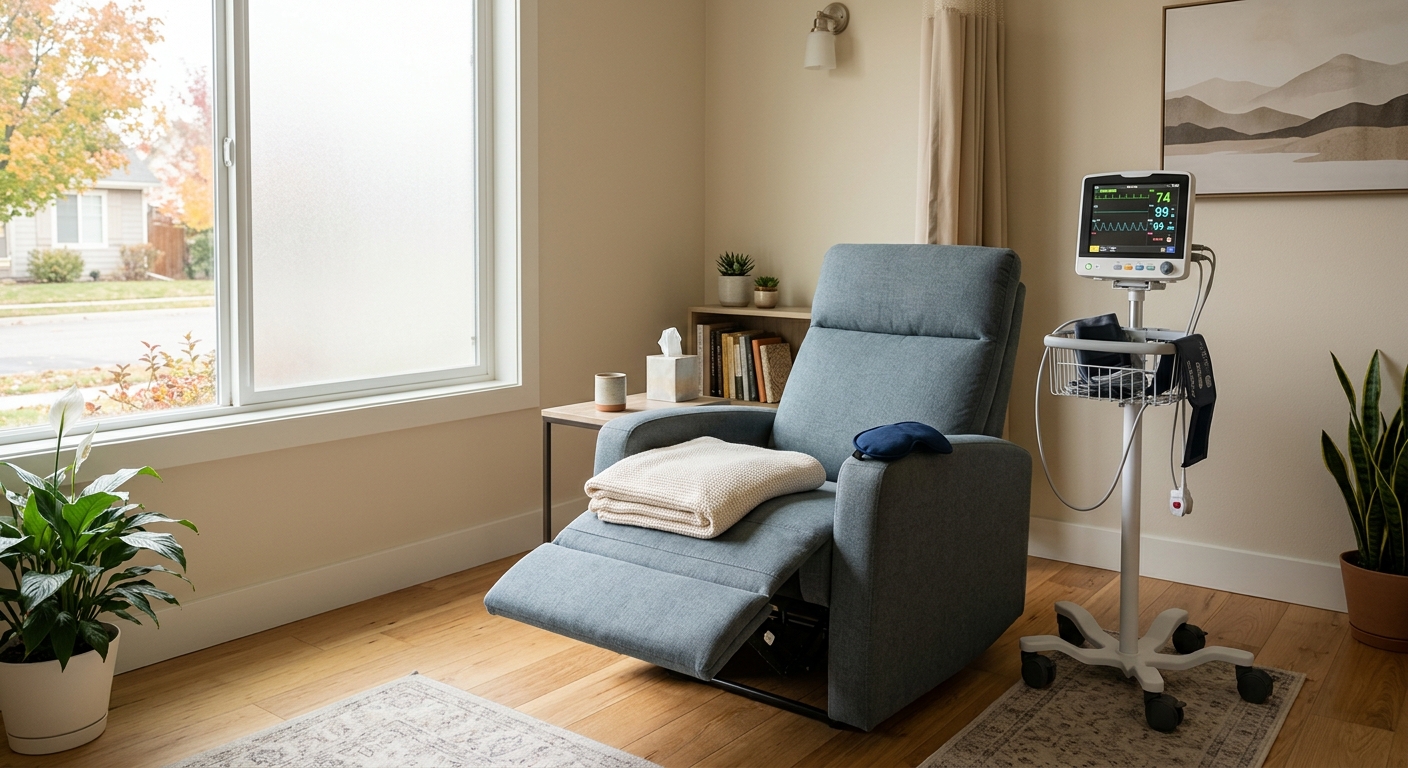
If you're weighing ketamine treatment in the Boise or Eagle area, the honest answer to "is ketamine therapy safe" has less to do with the medication itself and more to do with who screens you before you ever sit in the chair. A good clinic runs a real medical workup first — diagnostic history, baseline vitals, a line-by-line medication review, and labs where indicated. This guide walks through exactly what gets checked, what gets flagged, and how to judge whether the clinic you're considering is doing it properly.
Quick Answer
Ketamine therapy is generally considered lower-risk when it follows a structured medical screen and continuous in-room monitoring, though individual outcomes and risks vary. Before a first infusion, a careful clinic checks four things: your psychiatric diagnosis and history, your cardiovascular status and blood pressure, every medication and substance you take, and your readiness for a monitored session. During dosing, vitals are tracked and a trained clinician stays present. Screening — not the drug alone — is what makes the setting safe.
TL;DR
- Screening is medical, not paperwork. A real intake covers five domains before anyone schedules you. See what a clinic screens first
- **Blood pressure concerns are a common reason sessions get rescheduled, because ketamine can transiently raise blood pressure. Review the conditions that pause treatment
- Your medication list changes the plan — benzodiazepines and certain mood stabilizers get specific discussion. Read how medications are reviewed
- Monitoring standards separate established clinics from pop-ups. Ask who is in the room and what's being measured. Compare the monitoring standards
- Most people who are screened out are screened out temporarily, pending a blood pressure fix or a prescriber conversation. Check the green-flag vs. red-flag answers
In This Article
- Is Ketamine Therapy Safe When It's Properly Screened?
- What Does a Ketamine Clinic Screen Before Your First Infusion?
- Which Health Conditions Pause or Rule Out Treatment?
- How Do Your Current Medications Change the Plan?
- What Monitoring Should Happen During the Infusion?
- How Do You Prepare for a Ketamine Infusion the Day Before?
- How Can You Tell a Clinic Screens Properly?
- What Happens After the Infusion and What Gets Rechecked?
Is Ketamine Therapy Safe When It's Properly Screened?
The safety question turns on dose and setting. Ketamine has decades of use as an anesthetic, and its pharmacology, adverse effects and monitoring requirements are documented in the peer-reviewed clinical literature, including the StatPearls ketamine monograph. Mental-health and pain infusions use a much lower dose than surgery does.
Subanesthetic ketamine is a low dose — well below the amount used to induce surgical anesthesia — given slowly so the person stays awake, breathing on their own, and able to respond. That difference is the whole reason a monitored outpatient infusion is possible at all.
Regulators treat the setting as part of the safety design. The FDA-approved label for esketamine nasal spray requires that it be administered under the direct observation of a healthcare provider, with a monitoring period after dosing and enrollment in a restricted distribution program — it is not dispensed for home use (SPRAVATO prescribing information). IV ketamine for mood and pain is used off-label, so the supervision standard is set by the clinic rather than by a federal program, which is precisely why how a clinic screens matters so much.
That standard is the backbone of IV ketamine therapy in Boise and Eagle: a medical evaluation first, a monitored room second, and a documented plan third. For a deeper look at the trade-offs involved, see a doctor's look at ketamine risks and benefits.
Key takeaway: The medication is the same in every clinic. The screening and monitoring around it are not — and that's where safety is won or lost.
What Does a Ketamine Clinic Screen Before Your First Infusion?
A complete pre-treatment screen covers five domains: psychiatric diagnosis and history, cardiovascular status, your full medication list, substance use history, and organ function where your history suggests it's warranted. Anything less is a shortcut.
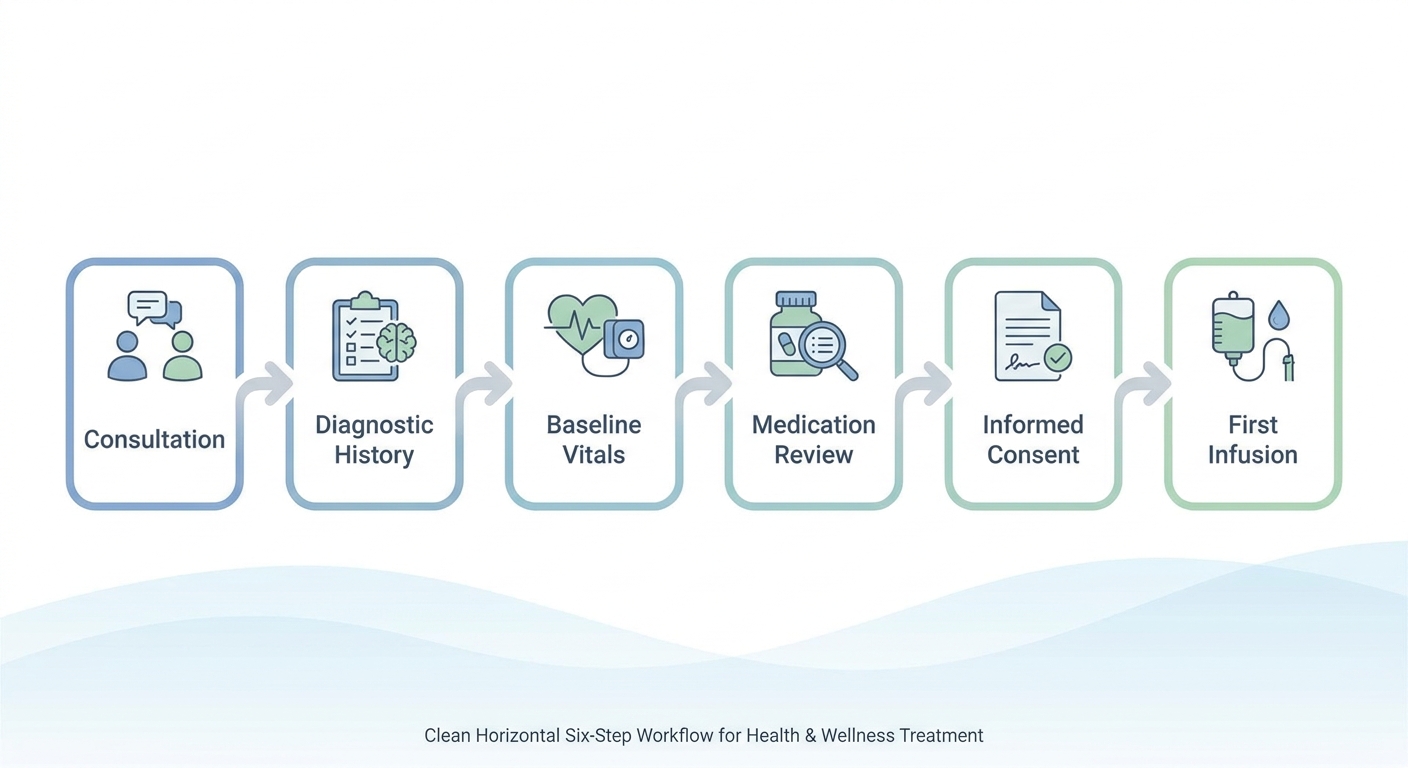
Here's the sequence most careful clinics follow.
- Consultation — a conversation about symptoms, what you've already tried, and your goals.
- Diagnostic history — including prior hospitalizations, head injury, and family psychiatric history.
- Baseline vitals — blood pressure, heart rate, oxygen saturation, weight for dose calculation.
- Medication reconciliation — every prescription, supplement and over-the-counter product.
- Informed consent — the realistic picture of what the series involves, including that results vary.
- Scheduling — only after the above is reviewed by a clinician.
Which questionnaires will I be asked to complete?
Standardized, scored instruments are the norm in interventional psychiatry because they create a measurable starting point. Expect some combination of:
- PHQ-9 — a nine-item depression symptom questionnaire.
- GAD-7 — a seven-item anxiety screen.
- PCL-5 — a PTSD symptom checklist mapped to diagnostic criteria.
- MDQ — a bipolar spectrum screening tool used to catch undiagnosed mania history.
Your baseline scores aren't busywork. They give you and your clinician a documented reference point to compare against as the series progresses, instead of relying on memory alone.
Who should actually perform the screen?
A licensed medical clinician — a physician, nurse practitioner, physician assistant or CRNA — not an intake coordinator reading from a script. The person reviewing your cardiac history should be qualified to interpret it. If you're unsure how the process begins locally, our walkthrough on how to book a ketamine appointment explains what the first call covers.
Key takeaway: A clinic that skips any of the five screening domains is cutting a corner that exists for a reason.
Which Health Conditions Pause or Rule Out Treatment?
Absolute contraindications are relatively few. Relative ones are common — and usually temporary. Most people who get a "not today" get a path back rather than a permanent no.
| Condition | Absolute or relative | Why it matters | Typical clinic action |
|---|---|---|---|
| Elevated or uncontrolled blood pressure | Relative | Ketamine can transiently raise blood pressure and heart rate | Reschedule; coordinate with your primary care provider |
| Aneurysmal vascular disease or recent intracerebral hemorrhage | Absolute | Listed as contraindications in the FDA esketamine label | Not treated; referred back to specialty care |
| Unstable angina or recent heart attack | Absolute | Cardiovascular strain during dosing | Cardiology clearance required before reconsideration |
| Raised intracranial pressure | Absolute in most protocols | Risk profile is unacceptable | Not treated |
| Active psychosis or schizophrenia | Absolute in most protocols | Dissociative effects may worsen symptoms | Referred to psychiatric care |
| Bipolar I with mania history | Relative | Requires psychiatric co-management | Treated only with prescriber coordination |
| Active substance use disorder involving ketamine | Relative to absolute | Misuse potential | Addiction care first |
| Pregnancy or breastfeeding | Absolute in most protocols | Safety not established | Deferred |
| Significant liver disease | Relative | Ketamine is metabolized hepatically | Labs reviewed; dose and candidacy reassessed |
| Untreated hyperthyroidism | Relative | Cardiovascular reactivity | Treated condition first |
⚠️ Blood pressure is the single most common same-day disqualifier. If your reading is high at the chair, a responsible clinic reschedules rather than dosing you anyway. Being turned away that morning is a sign the protocol is working, not a sign you've been written off.
Bipolar disorder deserves its own conversation rather than a yes/no box. Clinicians screen for mania history specifically because the care plan — and who else needs to be involved — changes. Our guide to ketamine and bipolar disorder screening covers how that assessment is handled.
How Do Your Current Medications Change the Plan?
Most psychiatric medications are continued, not stopped. Three categories, though, get specific attention during the review.
Medication reconciliation is a line-by-line review of every prescription, supplement and over-the-counter product you take, used to flag interactions before any dose is given. Bring the actual bottles or a photo of your pharmacy list — not a from-memory summary.
- Benzodiazepines — Research on benzodiazepine interactions with ketamine's effects in mood treatment is ongoing, with mixed findings, as discussed in the StatPearls ketamine monograph., so clinics typically discuss your dose and timing on infusion day rather than making a blanket rule.
- **Lamotrigine and related sodium-channel agents have been studied for possible effects on ketamine's subjective and clinical response, with findings discussed in the StatPearls ketamine monograph.; your prescriber decides, not the infusion clinic alone.
- Stimulants and blood-pressure-raising agents — reviewed because ketamine itself can transiently increase blood pressure and heart rate, an effect documented in the StatPearls ketamine monograph.
SSRIs and SNRIs are generally continued through a ketamine series. Stopping an antidepressant abruptly carries its own well-recognized risks, so any change belongs to the prescribing clinician. If you're already reconsidering your current regimen, our piece on weighing antidepressant side effects is a useful companion read before you make a decision.
Two more items belong on the list. Chronic pain patients with established opioid tolerance need their regimen reviewed because dosing and monitoring plans differ. And supplements count — sedating herbals and high-dose stimulant-type products are worth disclosing even if they came from a grocery store shelf.
Key takeaway: Asking "is ketamine therapy safe with my medications?" is the right question, and the honest answer only comes after someone reads your full list out loud with you.
What Monitoring Should Happen During the Infusion?
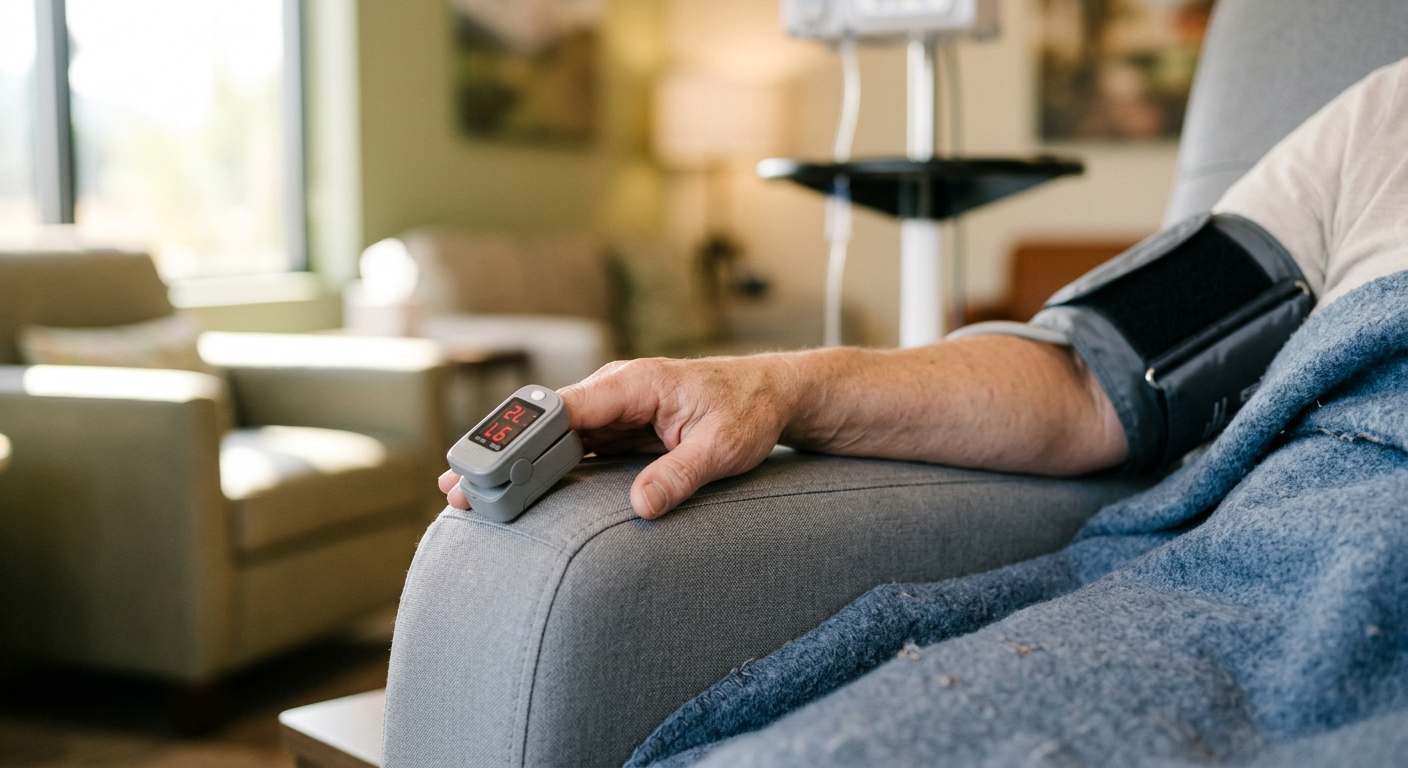
Continuous monitoring is the standard: pulse oximetry, a blood pressure cuff cycling at regular intervals, heart rate tracking, and a licensed clinician physically present or immediately available for the entire session plus recovery.
Each reading catches something specific:
- Blood pressure and heart rate — ketamine's transient cardiovascular bump is well documented, which is why the FDA esketamine label directs prescribers to measure blood pressure before dosing and again afterward, monitoring until values are acceptable.
- Oxygen saturation — a continuous check for the uncommon respiratory event.
- Direct observation — a clinician watching for nausea or distress during dissociation, so it can be addressed in the moment.
What should a clinic have on hand?
Ask directly. A prepared room includes an infusion pump that allows the rate to be adjusted rather than run blind, an anti-nausea medication such as ondansetron, a medication available to address a blood pressure spike, and airway equipment with staff trained to use it.
Your five-question monitoring checklist:
- What vitals do you monitor, and how often?
- Who stays in the room, and what is their license?
- What's your protocol if my blood pressure climbs mid-session?
- Can the infusion rate be adjusted if I'm uncomfortable?
- How long is recovery observation before I leave?
For more on the practical side of reducing predictable problems, see how clinics prevent ketamine side effects.
How Do You Prepare for a Ketamine Infusion the Day Before?
Three things matter most: following your clinic's fasting instructions, hydrating the day before, and confirming a ride home. Everything else is comfort.
Clinics set their own pre-session eating and drinking rules, so follow yours exactly rather than a generic internet list. As one published example of how specific these instructions get, the FDA label for esketamine nasal spray advises patients not to eat for a period before administration and to stop liquids shortly beforehand, because nausea and vomiting are recognized effects.
Day-before checklist:
- Hydrate steadily the day prior — not all at once that morning.
- Skip alcohol for at least 24 hours beforehand, and tell your clinic honestly if you didn't.
- Confirm your ride — a friend, family member or rideshare. No driving afterward.
- Protect your sleep the night before; arrive rested rather than wired.
- Pack comfort items — layers, an eye mask, a playlist you already know and like.
- Write one sentence about what you hope to work on. A simple intention beats an elaborate one.
⚠️ Arriving without a confirmed ride home is the most avoidable reason a first session gets cancelled. Lock it in the day before, not the morning of.
This section is deliberately short because the full version already exists: our 7-day ketamine prep checklist walks through the week leading up to a first infusion day by day.
How Can You Tell a Clinic Screens Properly?
Ask five questions. The answers tell you almost everything you need to know.
Interventional psychiatry is the branch of psychiatric care that delivers procedure-based treatments — ketamine infusions, esketamine, and TMS — under direct medical supervision rather than through prescriptions alone. Clinics operating in that model behave like medical practices, and it shows in how they answer. For a broader evaluation framework, read how to choose a ketamine clinic in Boise.
| Question to ask | Green-flag answer | Red-flag answer |
|---|---|---|
| Who performs my medical screen? | A physician, NP, PA or CRNA reviews my history | An intake coordinator or sales rep |
| Are vitals taken at every visit? | Yes, before, during and after each session | Only at the first appointment |
| Do you coordinate with my prescriber or therapist? | Yes, with my written consent | "That's not something we do" |
| What if my blood pressure is high that day? | We reschedule and help you follow up | "We'll go ahead anyway" |
| Is there a written plan for the series? | Yes, with scheduled reassessment points | Package pricing pushed before any evaluation |
One more signal: how fast they want to dose you. A clinic that offers screening and a first infusion in the same hour has compressed a medical evaluation into a sales appointment.
Key takeaway: The questions above cost you nothing to ask, and a clinic that welcomes them is usually the one you want.
What Happens After the Infusion and What Gets Rechecked?
Recovery monitoring continues until your vitals are back near baseline and you can stand and walk steadily — then a scored reassessment tracks the series over time. You don't leave the moment the pump stops.
Expect a wobbly first stretch: mild unsteadiness, lingering fuzziness, and sometimes nausea that settles before you go home. You'll be observed through it rather than left alone with it.
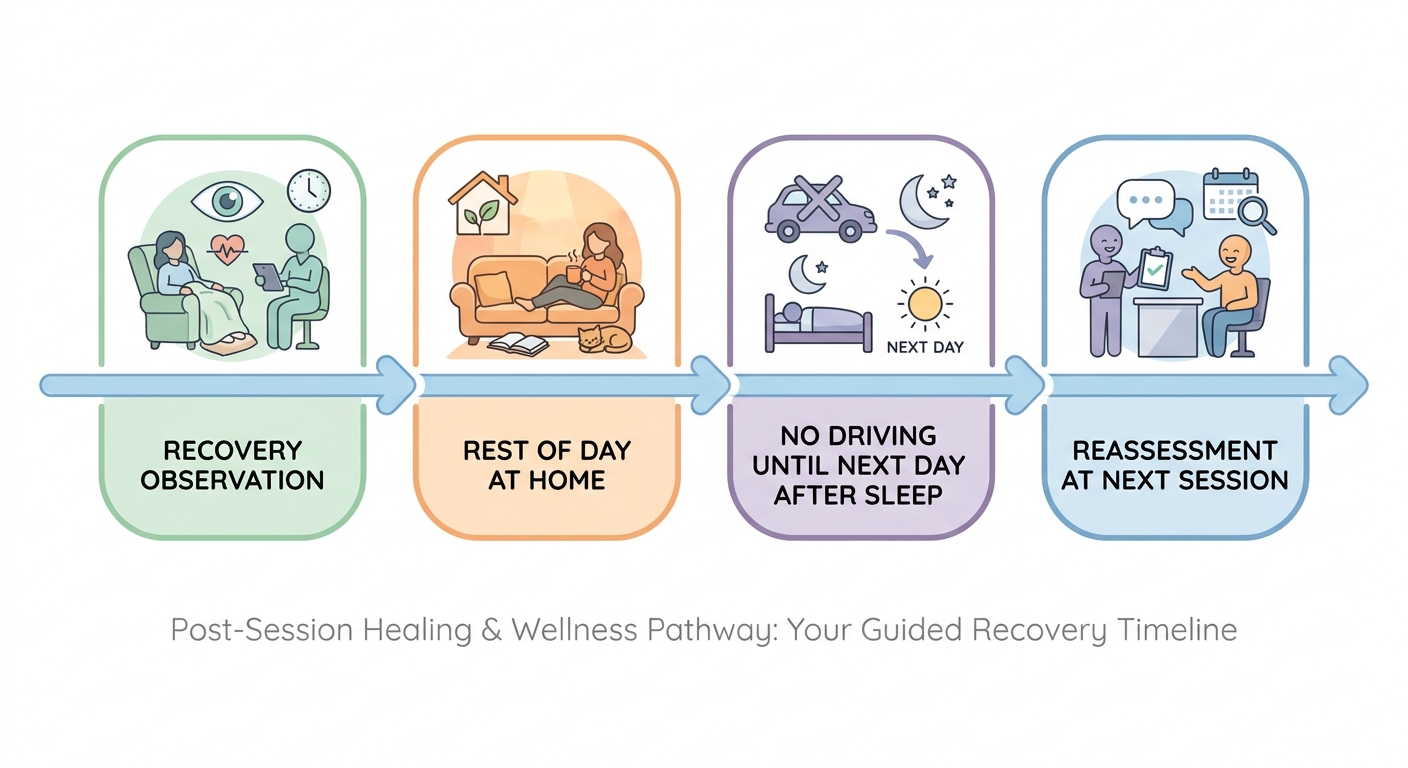
Driving is the firm rule. The FDA esketamine label instructs patients not to drive or operate machinery until the next day following restful sleep, and clinics commonly apply the same standard to IV sessions. Plan the rest of your day accordingly — no major decisions, no signing documents.
Reassessment is where screening pays off. Because you completed scored questionnaires at intake, your clinician can repeat them at set points in the series and compare real numbers rather than impressions. Results vary between individuals, and whether to continue, adjust or stop is a clinical decision made with you.
For maintenance patients, longer-term checks continue: periodic questions about urinary symptoms, blood pressure trends, and liver function review where indicated. If you want the granular version of what the first day feels like, see our breakdown of ketamine side effects hour by hour.
Summary
The question "is ketamine therapy safe" doesn't have a drug-level answer — it has a clinic-level one. Safety comes from a structured screen across five domains, honest medication reconciliation, clear contraindication rules, continuous monitoring with a trained clinician present, and documented reassessment afterward. Ask the five clinic questions above before you book anything. A practice that answers them comfortably is showing you its standards, and a practice that deflects is showing you something too.
Frequently Asked Questions
More answers on cost, candidacy and process are collected in our ketamine safety and process FAQ.
Can I Drive Myself Home After a Ketamine Infusion?
No. Arrange a ride, a friend, or a rideshare before your appointment — clinics will reschedule you if you arrive without one. The FDA label for esketamine directs patients not to drive or operate machinery until the next day after restful sleep, and infusion clinics commonly apply the same standard. Subtle effects on attention can linger after the obvious ones fade.
Does High Blood Pressure Disqualify Me From Ketamine?
Usually not permanently. Because ketamine can transiently raise blood pressure, a high reading at the chair typically triggers a reschedule rather than a refusal. Many people proceed later after their primary care provider adjusts treatment and readings stabilize. Each clinic sets its own threshold, so ask what theirs is during your consultation.
Do I Have to Stop My Antidepressant Before Ketamine?
Generally no. SSRIs and SNRIs are usually continued, and stopping abruptly carries its own recognized risks. Any change should be made by the clinician who prescribed it, not decided at the infusion clinic. Benzodiazepines are the category most likely to come up in discussion, because their interaction with ketamine's effects has been studied with mixed results.
How Long Does the Pre-Treatment Screening Take?
Pre-treatment screening typically involves one consultation, plus any records or labs your clinic requests from your other providers. Some histories require a follow-up call or coordination with a prescriber before scheduling. Same-day screening and dosing is worth questioning — a thorough review takes more than a few minutes.
Information about third-party platforms reflects publicly available details at the time of writing and may have changed. Please verify directly with the provider. See our Terms of Use for more.