IV Hydration Near Me: How to Vet a Clinic in Eagle
Zora Neuro Spa Editorial · November 10, 2026

Searching "IV hydration near me" from Boise, Eagle, or Middleton brings up a crowded mix of med spas, mobile vans, urgent cares, and medical clinics — and they are not interchangeable. The drip in the bag matters less than who screens you, who places the line, and who is watching while it runs. Here's how to tell the difference before you book.
Quick Answer
A good IV hydration clinic near you is medically supervised, publishes its ingredients and per-bag pricing before you book, and screens your health history before placing a line. IV hydration therapy delivers sterile fluids, electrolytes, and optional vitamins directly into a vein, bypassing digestion. In the Treasure Valley, that usually points toward an in-clinic medical or wellness practice with a nurse on site rather than a pop-up service. Ask about oversight first, menu second.
TL;DR
- IV hydration is an infusion of sterile fluid — and sometimes vitamins — given through a small catheter in your forearm. See what IV hydration therapy actually is
- It makes the most sense when fluid losses are real: vomiting, a hot Foothills hike gone long, migraine with nausea. It makes the least sense as routine top-up for someone already drinking enough. Check whether you're a good candidate
- Hydration, vitamin blends, immunity drips, and glutathione serve different goals — pick by goal, not by marketing name. Compare the four common drip types
- Seven questions separate a supervised clinic from a casual one, starting with "who is your medical director?" Run the seven-question vetting checklist
- Wellness drips are nearly always cash-pay, and price is driven by nursing time and oversight as much as ingredients. See what drives Treasure Valley pricing
In This Article
- What Is IV Hydration Therapy, Exactly?
- Who Actually Benefits From an IV Drip — and Who Doesn't?
- Which Drip Should You Pick? Hydration vs Vitamin vs Glutathione
- What Should You Ask Before Booking IV Hydration Near Me?
- What Does "IV Hydration Near Me" Cost in Boise and Eagle?
- Is IV Hydration Safe? Risks Worth Knowing
- How Do You Find a Legit IV Hydration Clinic Near You?
- Frequently Asked Questions
What Is IV Hydration Therapy, Exactly?
IV hydration therapy is an infusion of sterile fluid given through a thin catheter placed in a forearm vein, typically over about 30 to 60 minutes while you sit in a reclining chair. The base fluid is usually a standard isotonic solution such as normal saline or lactated Ringer's, supplied in common bag sizes like 500 mL or 1,000 mL.
The appeal is the route. Anything infused goes straight into the bloodstream rather than passing through the stomach and intestine first. That matters most when someone can't keep fluids down — not because an IV is inherently superior to a glass of water for a healthy, well-hydrated person.
Three things define the experience, whatever drip you choose:
- The base fluid — sterile water with electrolytes in a balanced concentration, the actual "hydration" part.
- The additives — vitamins, minerals, or antioxidants mixed in, which vary enormously between clinics.
- The supervision — intake screening, line placement by a licensed nurse, and monitoring while the bag runs.
If you want the deeper mechanical explanation of fluid movement and what the body does with each component, our breakdown of how IV hydration therapy works covers it in detail.
Key takeaway: IV hydration is a simple delivery method, not a treatment category — what you're really buying is the clinical judgment around it.
Who Actually Benefits From an IV Drip — and Who Doesn't?
IV hydration is most useful when fluid loss is real and measurable: a stomach bug with vomiting or diarrhea, heat exhaustion after a long summer climb in the Boise Foothills, depletion following an endurance event, or a migraine with nausea that makes drinking impossible. In those situations the IV route solves a specific problem — you can't swallow and hold fluids.
It is far less compelling for a well-hydrated adult looking for a general lift. Marketing for wellness drips often outpaces the published evidence, and large, high-quality trials supporting routine vitamin infusions for healthy people are limited. Honest clinics say so.
Scenarios where people most often seek a drip:
- After illness with fluid loss — vomiting, diarrhea, or fever.
- After heat and exertion — summer hikes, river days, race weekends in the valley.
- During a migraine with nausea — when oral intake is the barrier.
- Pre- or post-travel fatigue — commonly requested, with limited supporting research.
- Cosmetic or antioxidant interest — the category beauty-focused drips, sometimes marketed as an "inner beauty IV," belong to.
If your reason is genuine fluid replacement rather than a general boost, a straightforward hydration IV therapy in Eagle appointment is usually the right starting point — and a clinic should tell you when oral rehydration would do the same job for less.
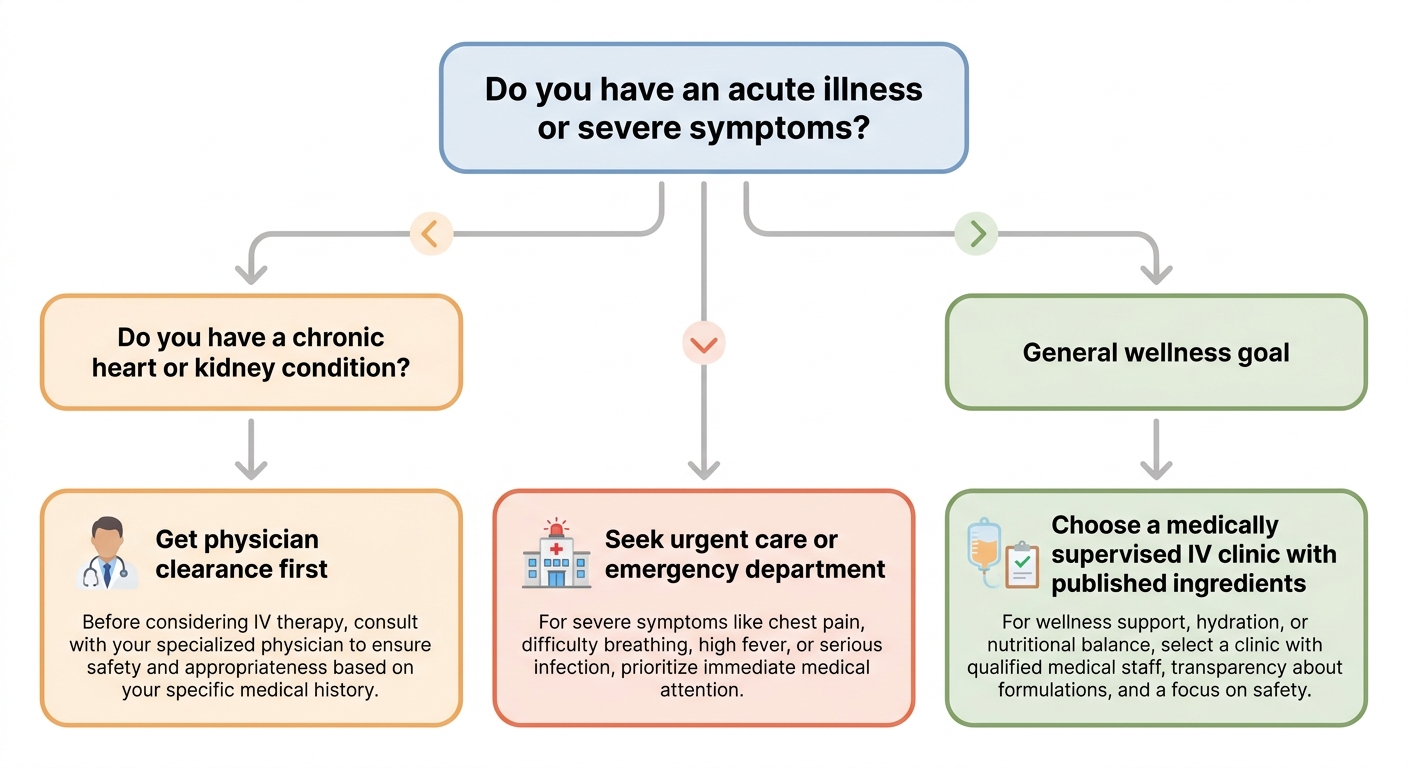
⚠️ Talk to your physician first if you have heart failure, kidney disease, or uncontrolled high blood pressure. A rapid fluid load is not neutral for everyone, and a responsible clinic will require clearance or decline the appointment.
Which Drip Should You Pick? Hydration vs Vitamin vs Glutathione
Pick by goal, not by product name. Clinic menus use creative branding, but almost every bag falls into one of four families.
| Drip type | Core components | Best-fit goal | Typical session length | Relative cost |
|---|---|---|---|---|
| Plain hydration | Sterile isotonic fluid, electrolytes | Replacing real fluid losses | ~30–45 min | Lowest |
| Myers'-style vitamin blend | B-complex, B12, magnesium, vitamin C, calcium | General IV vitamin therapy benefits; a common all-purpose request | ~45–60 min | Mid |
| Immunity blend | Higher-dose vitamin C, zinc, often B vitamins | Intended to support the body during seasonal stress | ~45–60+ min | Mid to higher |
| Glutathione | Glutathione, often added to a base bag | Antioxidant and skin-brightening interest | Short push or add-on | Add-on pricing |
A few distinctions worth knowing:
- Hydration bags are the simplest and the easiest to price honestly. If a clinic can't quote this one clearly, that's informative.
- Vitamin blends vary wildly in dose between providers, which is exactly why published ingredient lists matter.
- Glutathione is a tripeptide antioxidant the body makes on its own. It's commonly given intravenously because oral forms are broken down in digestion. Our explainer on what glutathione IV drips actually do separates the realistic glutathione IV drip benefits from the claims you'll see on social media.
Key takeaway: Two clinics can sell a drip with the same name and completely different contents — compare ingredient lists, not labels.
What Should You Ask Before Booking IV Hydration Near Me?
Seven questions, in this order, will tell you more than any review page.
- Who is the medical director, and who places the line? You want a named physician or nurse practitioner providing oversight and a licensed RN starting the IV.
- Are ingredients and doses published before I book? Not "vitamin blend" — the actual components and amounts.
- Is there a health screening before treatment? Medical history, medications, allergies, kidney and heart conditions.
- Where do the compounded ingredients come from? Ask whether they're sourced from a licensed compounding pharmacy.
- What's monitored during the infusion? Vital signs, IV site checks, and someone present who can respond.
- What's the all-in price? Base bag, add-ons, nursing fee, travel surcharge if mobile.
- What happens if I react? Every provider should have a clear, rehearsed answer.
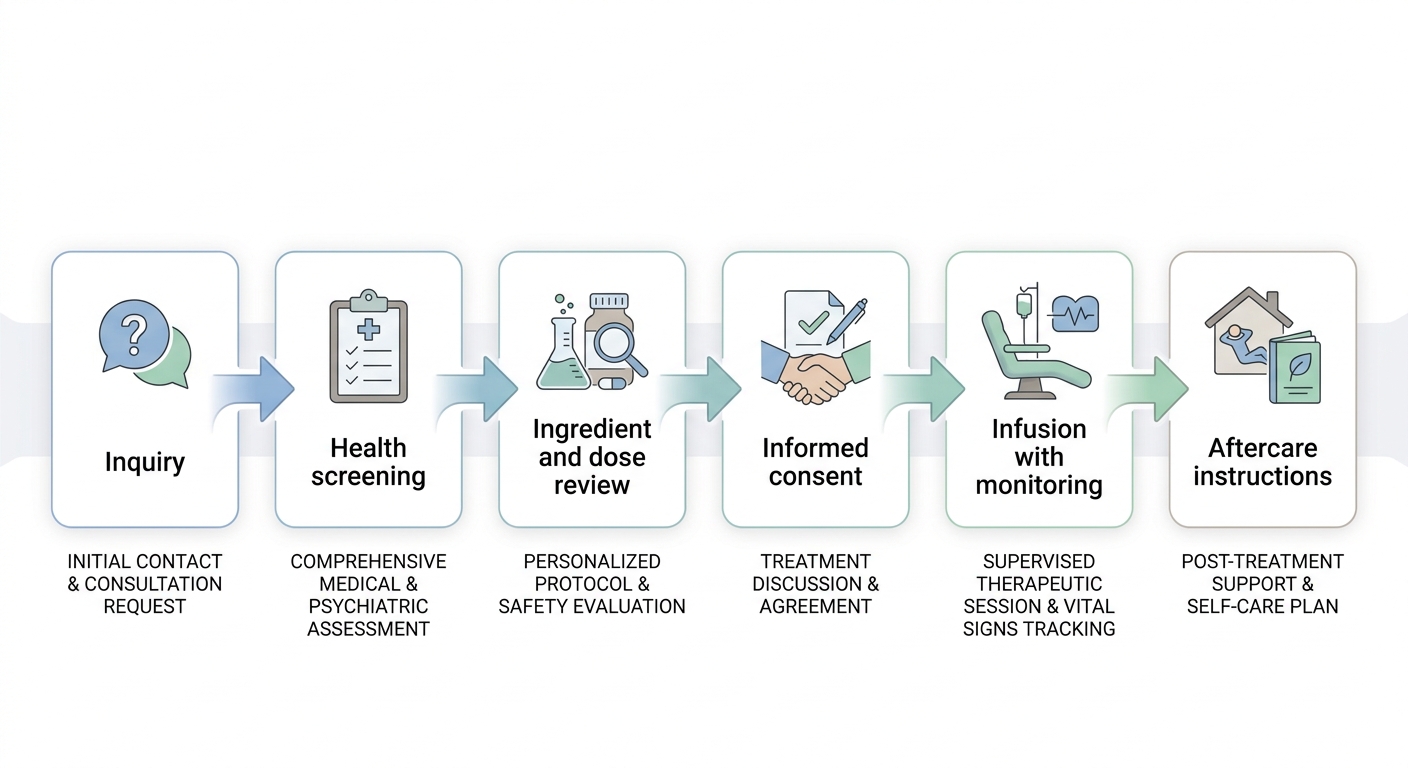
The workflow above is the shape a well-run appointment takes. Each box is a checkpoint, and skipping any of them is a shortcut taken at your expense. Our page on what to expect from IV nutrition walks through the same sequence from the patient's side, including how long you're in the chair and what you can do during the infusion.
Key takeaway: A clinic that welcomes all seven questions is showing you its process; one that deflects them is showing you something too.
What Does "IV Hydration Near Me" Cost in Boise and Eagle?
Almost all wellness infusions in the Treasure Valley are cash-pay, because insurance rarely covers IV therapy given for general wellness rather than a diagnosed medical need. Prices vary meaningfully between providers, so ask for a written all-in quote rather than relying on an advertised starting price.
What actually drives the number:
- Base fluid and bag size — the least variable cost.
- Added nutrients — dose and number of additives move the price most.
- Nursing time — a longer infusion occupies a chair and a clinician.
- Medical oversight — screening, protocols, and a supervising prescriber have real overhead.
- Delivery model — mobile and concierge visits typically carry a travel component.
| Setting | Price position | Medical oversight | Screening depth | Ingredient transparency |
|---|---|---|---|---|
| In-clinic medical practice | Mid to higher | Prescriber-supervised, RN-administered | Full intake expected | Published menu typical |
| Med spa | Varies widely | Ask who supervises | Varies by location | Ask before booking |
| Mobile / concierge | Often includes travel fee | Ask who is on site | Varies by provider | Request in writing |
Deeply discounted flash promotions deserve a second look. A low promotional price isn't automatically a red flag, but it should prompt you to confirm that screening, nursing, and monitoring are all still included. You can review current IV nutrition therapy pricing in Eagle alongside the full ingredient list for each bag, which is the format worth expecting from any provider you consider.
Is IV Hydration Safe? Risks Worth Knowing
For healthy adults in a supervised setting, IV hydration is generally low-risk — but it's still an invasive procedure, and that framing should shape how you choose a provider.
Known risks include:
- Infiltration — Infiltration occurs when fluid leaks out of the vein into surrounding tissue, causing swelling, coolness, and discomfort at the site.
- Phlebitis and bruising — vein irritation or a bruise where the catheter sat.
- Infection at the insertion site — the reason sterile technique isn't optional.
- Electrolyte disturbance — a consideration with repeated large-volume infusions, especially for people with cardiac or kidney conditions.
- Allergic reaction to an additive — uncommon, but a reason the clinic needs your allergy history and a response plan.
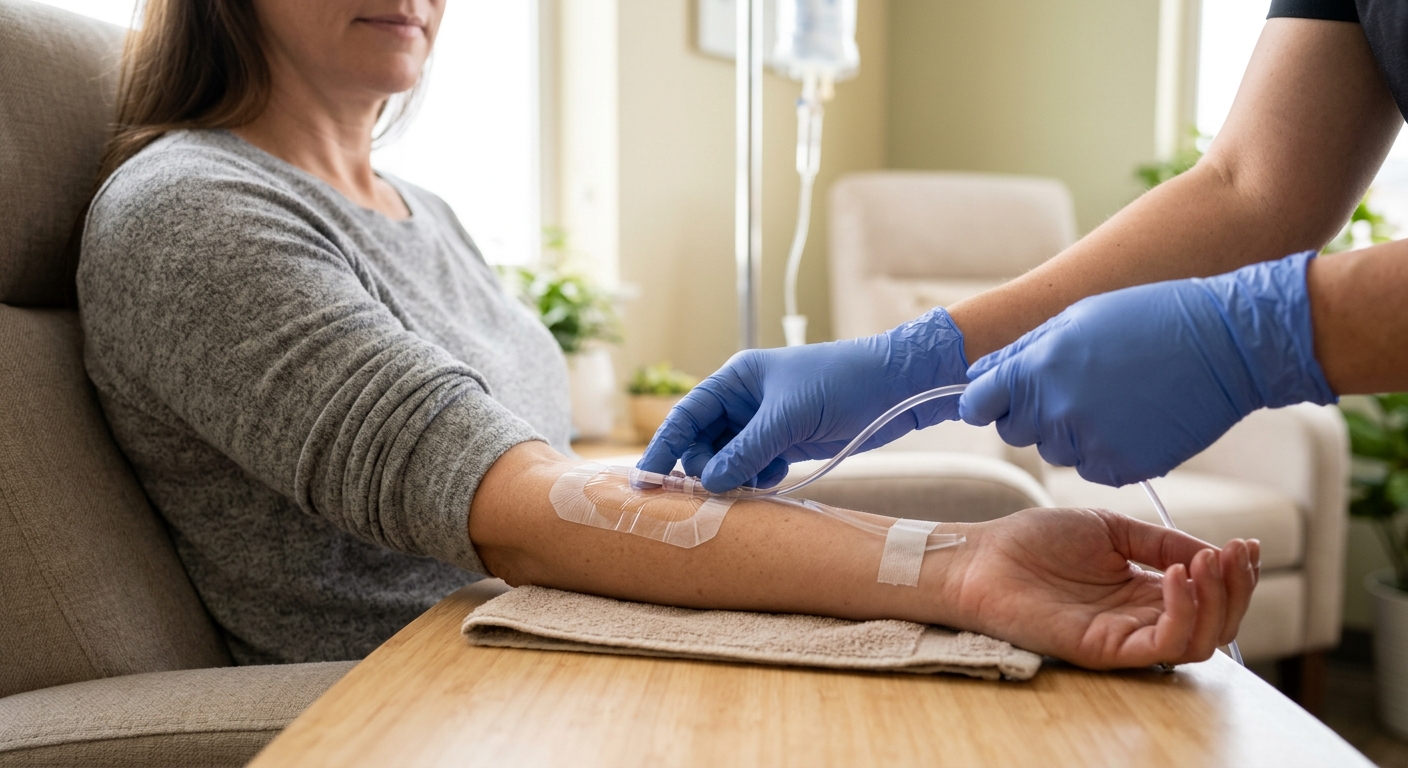
Certain additives warrant extra care. High-dose vitamin C, for example, is a scenario where clinicians commonly ask about G6PD deficiency before proceeding. Any provider mixing higher-dose nutrients should be asking about your history, not just your preferences.
⚠️ Stop the infusion and tell staff immediately if you notice swelling, burning, chest tightness, shortness of breath, or a rash. Don't wait to see whether it passes.
How Do You Find a Legit IV Hydration Clinic Near You?
Search by oversight, not by driving distance. A clinic four minutes away with unclear supervision is a worse choice than one twenty minutes away with a named medical director.
Practical steps:
- Verify licenses through the Idaho Board of Nursing and Board of Medicine lookup tools.
- Read reviews for process clues — mentions of intake questions, vein care, and nurse professionalism matter more than star counts.
- Confirm a published menu with ingredients and doses listed before booking.
- Prefer practices where IV nutrition sits alongside other clinically supervised care. A clinic that also runs physician-supervised services — ketamine therapy in Boise and Eagle, for example — is already built around screening, consent, and monitoring.
Zora Neuro Spa is a clinic serving Boise and Eagle where IV nutrition is delivered inside that same medical framework — intake, supervision, and documented ingredients — rather than as a standalone retail add-on.
Key takeaway: Proximity is a convenience factor. Oversight is a safety factor. Rank them in that order.
Frequently Asked Questions
How long does an IV hydration session take?
Most standard hydration or vitamin infusions run roughly 30 to 60 minutes once the line is placed, depending on bag size and additives. A glutathione push added to a base bag is generally shorter. Higher-dose vitamin C infusions are usually run more slowly and can take longer. Budget extra time for check-in and screening on a first visit.
How long do IV hydration effects last?
Fluid and electrolyte effects are typically felt within the same day and taper over the following day or two as your body rebalances. Water-soluble vitamins are cleared comparatively quickly, since the body excretes what it doesn't use. Individual results vary. For a fuller breakdown, see our guide to how long IV vitamin infusions last.
Does insurance cover IV hydration therapy?
Rarely, for wellness drips — these are generally cash-pay services. IV fluids ordered for a diagnosed medical condition in a clinical setting may be billable, which is a different scenario entirely. HSA and FSA eligibility varies by plan and administrator, so confirm with your plan before assuming reimbursement.
Is IV hydration better than drinking water?
Not for everyday hydration. For a healthy person who can drink normally, oral fluids with electrolytes are cheaper, non-invasive, and widely considered sufficient. The IV route's advantage is specific: it bypasses the gut, which matters when nausea, vomiting, or significant fluid loss makes drinking impractical. Choose based on that distinction, not on habit.
How often can you get IV hydration?
Many clinics space routine wellness drips several weeks apart rather than offering them on demand. More frequent infusions should be guided by a clinician and, where relevant, lab work — particularly with high-dose nutrients. If a provider encourages weekly drips without asking anything about your health, treat that as a reason to ask more questions.
Summary
Searching "IV hydration near me" in Eagle, Boise, or Middleton is the easy part. The decision that matters is which provider you hand your vein to. Confirm the medical director, confirm an RN is placing the line, confirm a real health screening, and confirm the full ingredient list and all-in price before you book. Match the drip to an actual goal — fluid replacement, a vitamin blend, or an antioxidant add-on — and skip it entirely when a bottle of water and electrolytes would do the same job. Well-run IV therapy is unremarkable by design: screened, supervised, documented, and boring in the best way.
Information about third-party providers reflects publicly available details at the time of writing and may have changed. Please verify directly with the provider. See our Terms of Use for more.