Ketamine Infusion Side Effects in Emmett: A Chronic Pain Checklist
Zora Neuro Spa Editorial · October 13, 2026

Chronic pain patients traveling from Emmett to a Boise-area clinic usually ask the same first question: what is this actually going to feel like, and what should worry me? This checklist covers the most common ketamine infusion side effects, how long they typically last, and which symptoms justify a same-day phone call. Keep it handy before your first appointment.
Quick Answer
Most ketamine infusion side effects are short-lived and dose-related. The four reported most often are dissociation (a floaty, detached feeling), nausea, dizziness, and a temporary rise in blood pressure and heart rate. According to the StatPearls clinical monograph on ketamine, these effects are tied to the drug's short-acting profile and typically ease after the infusion ends. Serious events are uncommon in monitored clinic settings, and recovery time varies from person to person.
TL;DR
- Four effects dominate the list — dissociation, nausea, dizziness, and a transient blood pressure bump. See the side effect frequency table
- Pain protocols are often longer than depression protocols, so the same person may notice effects more than a friend treated for mood. Compare pain and depression protocols
- The genuinely rare risks — bladder irritation, liver enzyme changes — are documented mainly with frequent, high-dose, unsupervised use. Read what the rare-risk literature shows
- A few symptoms deserve a same-day call, including chest pain, a worsening headache, or painful urination. Use the call-or-wait decision table
- Screening and monitoring prevent much of this upfront. See the five prevention levers clinics use
In This Article
- How Common Is Each Side Effect?
- What Will You Actually Feel During the Infusion?
- What Happens in the 24 Hours After?
- Which Side Effects Are Rare but Worth Knowing?
- Do Chronic Pain Protocols Cause More Side Effects Than Depression Protocols?
- When Should You Call the Clinic?
- How Do Clinics Reduce Side Effects Before They Start?
How Common Is Each Side Effect?
Published frequency figures vary widely between studies, doses, and patient groups, so the honest answer is a ranking rather than a percentage. Dissociation, nausea, dizziness, and short-term cardiovascular stimulation sit at the top of the reported list in the StatPearls ketamine monograph. Everything below them is noticeably less frequent.
Dissociation is a temporary shift in how you perceive your body, time, and surroundings — things may feel distant, dreamlike, or slowed down. It is an expected pharmacological effect, not a sign something has gone wrong.
| Side Effect | Relative Frequency | Typical Pattern | What Often Helps |
|---|---|---|---|
| Dissociation | Very commonly reported | Peaks mid-infusion, fades after the drip stops | Low lighting, eye mask, slower rate |
| Nausea or vomiting | Commonly reported | During or shortly after | Anti-nausea medication before starting |
| Dizziness / unsteadiness | Commonly reported | Through the recovery period | Sitting up slowly, staying seated |
| Raised blood pressure or heart rate | Commonly reported | Transient, monitored throughout | Vitals checks, rate adjustment |
| Blurred or drifting vision | Less common | Resolves with the drug | Closing the eyes |
| Headache | Less common | Hours after | Hydration, rest |
| Drowsiness | Common | Several hours | Ride home, no driving |
| Tearfulness or emotional swings | Less common | During or shortly after | Staff reassurance |
For a tiered look at what counts as mild versus serious, see a severity-by-severity breakdown of ketamine side effects.
Key takeaway: The common effects are predictable and monitored; the rare ones are what screening exists to catch.
What Will You Actually Feel During the Infusion?
Most people notice something within the first several minutes — a floaty, slightly heavy, pleasantly detached feeling. It builds gradually, holds through the middle of the session, and eases once the line is stopped.
Common sensations patients describe include:
- Altered time sense — twenty minutes may feel like five, or the reverse
- Light-headedness when turning the head
- Visual drift with eyes open; colors or patterns with eyes closed
- Tingling or coolness at the IV site
- Heaviness in the arms and legs, like sinking into the chair
None of this is an adverse event. It is the medication doing what it does. Our guide to IV ketamine therapy in Boise and Eagle covers the session setup in more detail.
⚠️ Feeling "weird" is not the same as a complication. Discomfort that staff can adjust for — nausea, anxiety, too-intense dissociation — should be reported out loud during the session, not endured quietly.
What Happens in the 24 Hours After?
Grogginess, mild headache, and wobbly balance are the usual post-infusion complaints, and most people describe settling back toward baseline by the next morning. Recovery time differs between individuals, which is why clinics use discharge criteria rather than a fixed clock.
Before you leave, run this checklist:
- Vitals rechecked and documented by staff
- Steady on your feet when walking a short distance
- Ride home confirmed — no driving for the rest of the day
- Water and light food planned for the next few hours
- Who to call after hours written down
- Next appointment scheduled
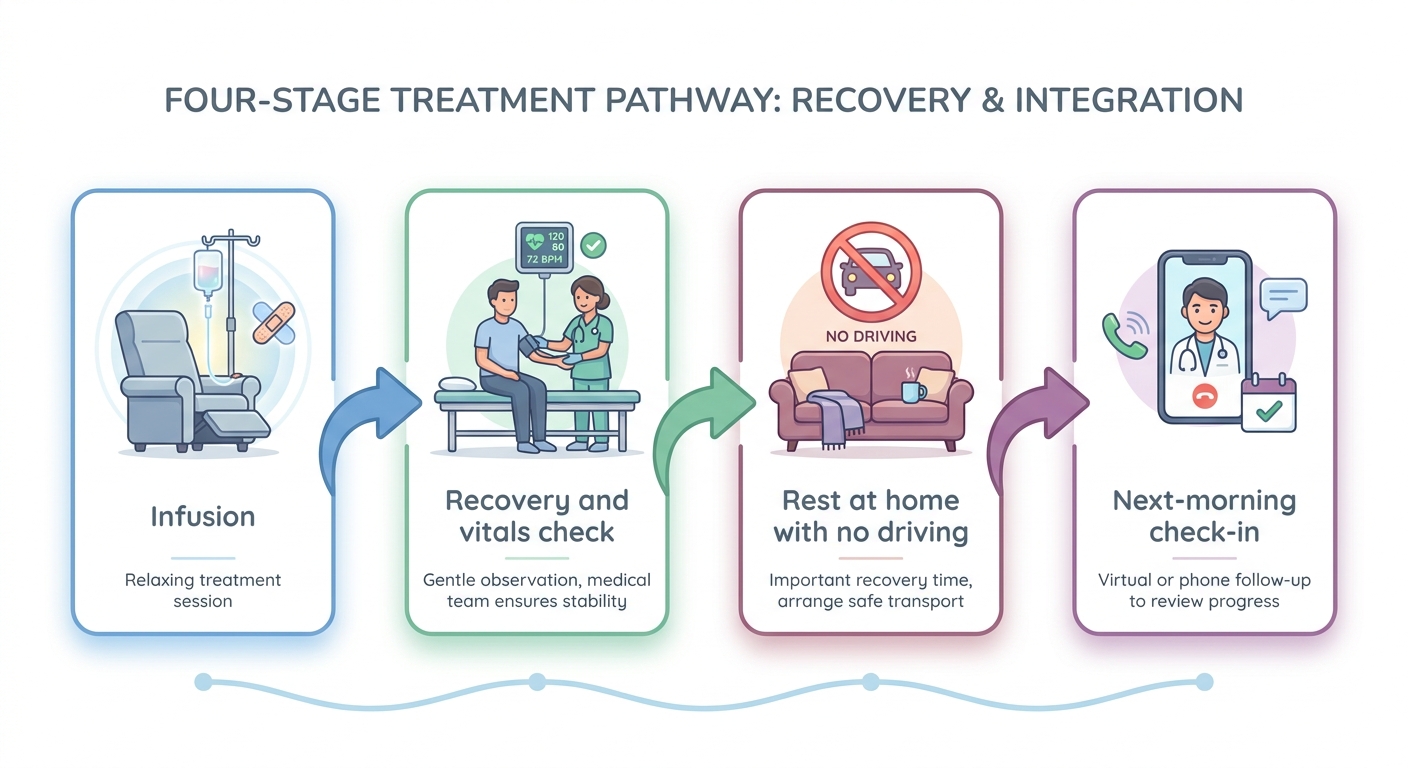
The ride-home rule matters for anyone commuting in from Emmett, Horseshoe Bend, or Middleton — plan the driver before you book, not the morning of. Keeping brief notes that evening also helps your provider adjust the next session; see what to track at home after an infusion.
Which Side Effects Are Rare but Worth Knowing?
Bladder irritation, liver enzyme elevation, and dissociation that lingers past the expected window are the genuinely uncommon concerns. The published literature associates them overwhelmingly with frequent, high-dose, long-duration use outside medical supervision — not with a standard, spaced, monitored infusion series.
Ketamine cystitis refers to inflammation and irritation of the bladder lining linked to heavy, repeated ketamine exposure. Reported symptoms include urinary urgency, frequency, and pain with urination.
Two more worth naming plainly:
- Hepatic enzyme changes — raised liver markers have been described with repeated or prolonged exposure, which is part of why providers review liver history during screening.
- Craving or tolerance — ketamine has recognized abuse potential, which is why the FDA-approved label for esketamine nasal spray places that product under a restricted distribution program with in-clinic administration and observation; IV ketamine infusions for chronic pain are a separate, off-label use not approved or reviewed by the FDA for this purpose, and are administered at the clinician's discretion.
⚠️ Rare does not mean ignorable. Tell your provider about bladder symptoms, liver disease, uncontrolled blood pressure, or a history of substance misuse before your first session — not after.
For how risk is reassessed across a longer course of care, read our look at ketamine side effects after six months of treatment.
Do Chronic Pain Protocols Cause More Side Effects Than Depression Protocols?
Often, yes — and the reason is simple arithmetic. Pain protocols are often structured with longer sessions and higher cumulative dosing than mood protocols, and individual experience with side effects varies. Clinics offset that with slower titration and pre-medication.
| Pain-Focused Protocol | Mood-Focused Protocol | |
|---|---|---|
| Infusion length | Generally longer per session | Generally shorter |
| Cumulative dose | Often higher across the series | Typically lower |
| Series structure | Varies by condition and response | Commonly a short initial series |
| Most reported effect | Nausea and deeper dissociation | Dissociation, dizziness |
These are general patterns, not prescriptions. Dosing is individual, decided in consultation, and adjusted session to session.
Conditions like CRPS and fibromyalgia are typically approached with their own dosing logic — see CRPS infusion protocols and dosing and our overview of which chronic pain conditions respond to ketamine.
Key takeaway: Longer pain infusions mean side effect planning matters more, not that the treatment is riskier by nature.
When Should You Call the Clinic?
Call the same day for chest pain, a headache that worsens instead of fading, vomiting you cannot stop, painful or bloody urination, or dissociation still present at bedtime. Use this table as your sorting tool.
| Symptom | Wait and Rest | Call Today | Seek Emergency Care |
|---|---|---|---|
| Mild grogginess, 2–4 hours | ✓ | ||
| Nausea easing with fluids | ✓ | ||
| Headache that keeps intensifying | ✓ | ||
| Vomiting that won't stop | ✓ | ||
| Painful or bloody urination | ✓ | ||
| Dissociation lasting past bedtime | ✓ | ||
| Chest pain or trouble breathing | ✓ | ||
| Fainting or new weakness | ✓ |
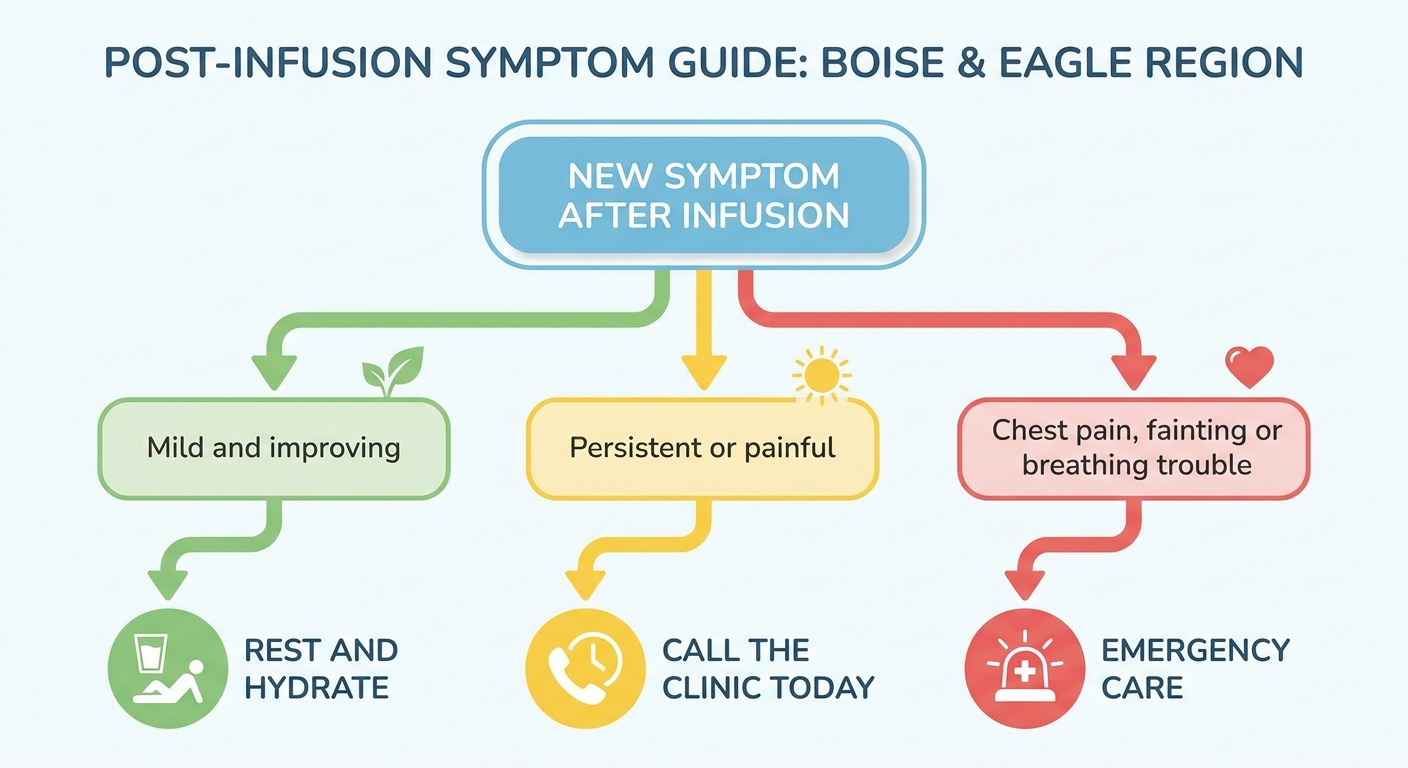
A staffed clinic should answer the phone between visits. If you are unsure, call — triaging a symptom over the phone takes a few minutes and spares you a night of worrying from Emmett at 9pm. You can also reach our Eagle team with questions between appointments.
How Do Clinics Reduce Side Effects Before They Start?
Most side effect management happens before the needle goes in. Five levers do the heavy lifting:
- Screening — cardiac history, blood pressure control, liver and bladder history, psychiatric history, and medication review
- Slow titration — starting conservatively and adjusting the rate based on response
- Continuous monitoring — blood pressure cuff and pulse oximetry throughout the session
- Anti-nausea medication — commonly given before the infusion begins
- A low-stimulus room — dim light, quiet, eye mask, reclining chair
This is the practical gap between a supervised clinic setting and unsupervised at-home dosing: someone is watching the numbers and can adjust mid-session. For the full picture, see how clinics monitor and prevent side effects.

Key takeaway: Ask any clinic you're considering what they monitor, how often, and who stays in the room — the answer tells you a lot.
Summary
Ketamine infusion side effects for chronic pain patients are mostly predictable, mostly short-lived, and mostly manageable with preparation. Expect dissociation, possible nausea, dizziness, and a monitored blood pressure bump. Plan a ride home, keep the call-or-wait table nearby, and report anything unexpected rather than waiting it out. Suitability, dosing, and risk are decided in a clinical consultation, and results vary between individuals.
Frequently Asked Questions
More logistics, cost, and safety answers live in our ketamine safety and process FAQ.
How long do ketamine infusion side effects last?
Most of the noticeable effects fade after the infusion ends, since ketamine is short-acting, as described in the StatPearls monograph. Grogginess can linger into the evening for some people. Recovery time varies, which is why clinics discharge on criteria rather than a stopwatch.
Can you drive after a ketamine infusion?
No. Arrange a ride home and avoid driving for the rest of the day. The FDA label for esketamine nasal spray instructs patients not to drive until the next day after restful sleep, and clinics apply similarly cautious rules to IV sessions. If you're coming from Emmett or Middleton, line up your driver before booking.
Does ketamine damage your bladder at therapeutic doses?
Bladder injury is documented mainly in frequent, high-dose, long-term use outside medical supervision. It is not a routine finding in standard, spaced medical series. Report any urinary urgency, frequency, or pain to your provider promptly so it can be evaluated.
Are nasal spray side effects different from IV?
They overlap but aren't identical. Esketamine nasal spray shares dissociation and nausea, and its FDA label also lists effects such as dizziness and sedation, with administration and post-dose observation required in a certified healthcare setting. Route choice is a clinical decision made with your provider.
Information about third-party platforms reflects publicly available details at the time of writing and may have changed. Please verify directly with the provider. See our Terms of Use for more.